El polvo de camada de gato es uno de esos problemas que se sienten pequeños hasta que no lo son. Vertes una bolsa y ves una pequeña nube. Más tarde, aparece una película delgada cerca de la caja. En algunos hogares, también significa estornudar, ojos aguados, o un gato que parece un poco más oloroso después de una recarga fresca.
Esta comparación práctica se centra en camada de gato menos polvosa opciones con las que realmente puedes vivir. Cubre lo que crea polvo, cómo se comportan los materiales comunes y algunos pequeños hábitos que cortan el polvo incluso antes de cambiar de producto.
Lo que significa "la lixa de gato menos polvosa" en casa
El "polvo bajo" no es una sola cosa. La misma camada puede sentirse limpia en una casa y molesta en otra, principalmente porque el polvo aparece de dos maneras diferentes.
Polvo aerotransportado vs polvo rastreado
El polvo en el aire es la materia ligera que notas durante el vertido o cuando tu gato cava duro. Colga en el aire por un momento, luego se asenta en superficies cercanas.
El polvo rastreado es diferente. Se pega a las patas, y luego termina como huellas pálidas o manchas arenosas fuera de la caja. Algunas camadas apenas se "inflan", pero todavía siguen siguiendo como locos.
Una camada de gato con menos polvo debe reducir tanto la nube durante el manejo como el residuo fino que viaja.
Cuando el polvo se convierte en un problema real
El polvo es más que una tarea de limpieza cuando alguien en la casa tiene alergias, asma o senos sensibles. También puede importar para gatitos o gatos mayores que ya parecen propensos a una irritación leve.
Las quejas de polvo también aparecen en pequeños apartamentos. El flujo de aire limitado significa que incluso una pequeña sopla de polvo se siente más grande, y la esquina de la basura se convierte en el lugar donde evita estar cerca.
Por qué el polvo ocurre en la basura de gatos
El polvo se refiere principalmente al comportamiento del material bajo fricción. Los gránulos se frotan juntos en la bolsa. Se muelen bajo las patas. Se rompen durante el scooping. Algunos materiales permanecen intactos. Otros crean multas con el tiempo.
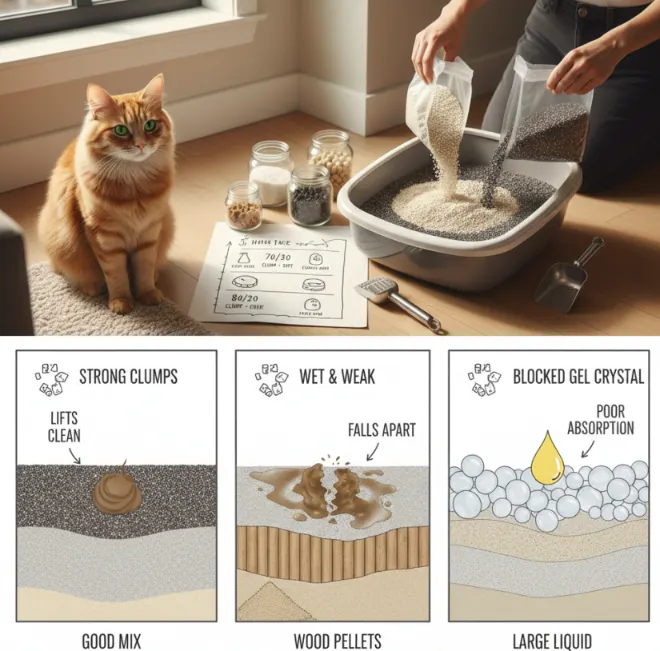
El patrón más grande es simple: los mismos rasgos del material que impulsan el polvo también dan forma al agrupamiento, el control del olor y la sensación de limpieza. Esa conexión es la razón por la que una única visión general de tipos de camada de gato puede ayudarlo a tomar decisiones más rápidas más tarde, incluso más allá del polvo.
Multas por fabricación y envío
La mayoría de las bolsas contienen “finas”, pequeñas partículas que se depositan en la parte inferior. La vibración del envío y la compresión de la bolsa empeoran. Cuando se vierte, las finas se levantan primero, por lo que los primeros segundos pueden parecer una tormenta de polvo incluso cuando el resto de la bolsa está bien.
Desglose dentro de la caja
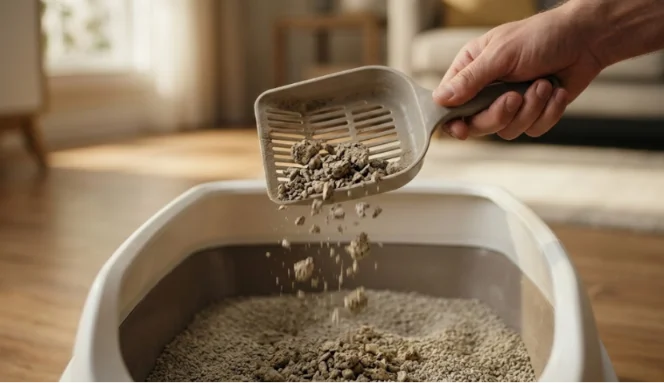
Algunas camadas comienzan con poco polvo y luego se vuelven polvosas después de una semana. Eso suele suceder cuando los gránulos se desmoronan durante la excavación y los grumos se rompen durante la excavación. Una caja que se agita y raspa todos los días es básicamente una prueba de estrés.
Hábitos que empeoran el polvo
Algunos hábitos comunes aumentan el polvo rápidamente:
- Vertiendo desde arriba
- Saquear la bolsa para “esparcirla”
- Aplastar antiguos grumos para encajar una cuchilla
- Dejar que los grupos se sienten demasiado tiempo, luego romperse
Nada de esto significa que "lo hiciste mal". Sólo explica por qué el polvo puede cambiar incluso cuando no cambias la camada.
Para entender las razones de fabricación detrás de la basura polvosa, lea Cómo la elección del material afecta al control del polvo en los productos de basura para gatos.
Comparación práctica del polvo entre los tipos comunes de basura
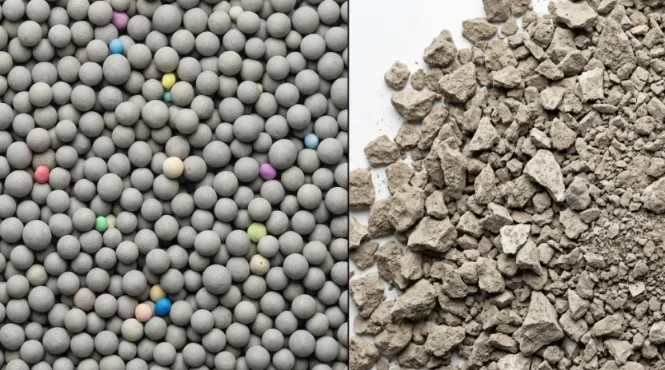
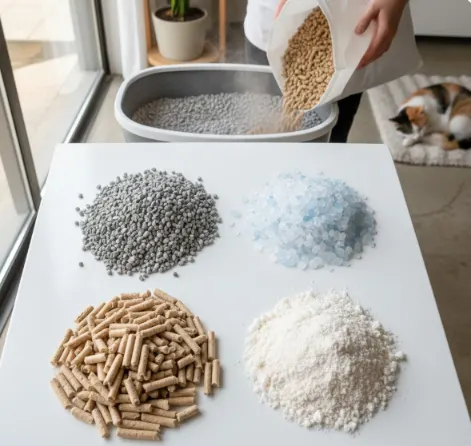
Puedes encontrar etiquetas de “bajo polvo” en casi cualquier cosa. El material todavía establece la línea de base. Aquí está la comparación real de polvo de camada de gato a través de los cuatro tipos comunes.
Polvo de basura de gato bentonita
La bentonita es la clásica arcilla aglutinante. Se absorbe rápidamente y forma aglomeraciones firmes, lo que hace que la recogida diaria sea fácil.
El compromiso es el riesgo de polvo. La arcilla a menudo contiene partículas finas por naturaleza, y puede abradir durante el envío y el uso. Señales típicos:
- Una bocadura visible cuando se vierte
- Deposición de polvo alrededor del área de la camada
- Más multas a medida que envejece la caja
Incluso con una mejor selección, el polvo de camada de gato de bentonita sigue siendo una de las principales quejas, especialmente en hogares con varios gatos donde la caja se trabaja duro.
Cristal gato basura polvo
La camada de cristal (a menudo gel de sílice) utiliza gránulos duros que resisten el desmoronamiento. En muchos hogares, está cerca del territorio más bajo de polvo para las partículas transportadas por el aire.
Lo que generalmente notas:
- Mucho menos “humo” durante el vertido
- Menos residuos polvosos con el tiempo
El intercambio es rutinario. Muchas camadas de cristal no se agrupan como arcilla. La limpieza puede sentirse más como agitar, tamizar y programar cambios completos. A algunos gatos les encanta. Algunos actúan ofendidos por la textura.
Desde un ángulo de solo polvo, el rendimiento bajo polvo de la camada de gato de sílice es fuerte.
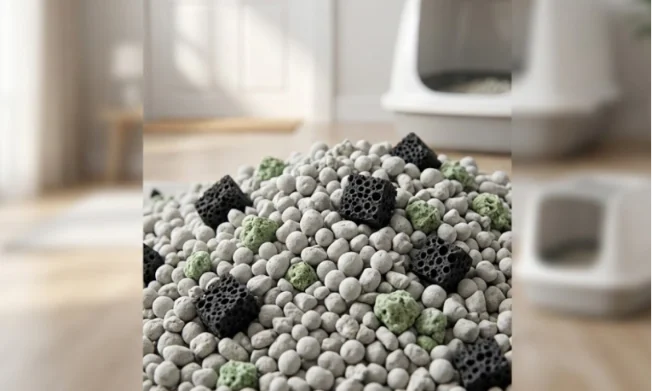
Licha de gato de tofu bajo polvo
La camada de tofu es a base de plantas y se forma en piezas más grandes y suaves. Ese tamaño importa. Los gránulos más grandes significan menos fines en el aire, y el material tiende a resistir la molienda en polvo.
En uso real, el rendimiento bajo polvo de la camada de gato de tofu se muestra en tres lugares:
- Vertidos limpiadores
- Cuchillas limpiadoras
- Menos “película en polvo” cerca de la caja
El seguimiento todavía puede suceder, especialmente con pellets más ligeros. Una esterilla de camada adecuada arregla mucho de eso. Para los hogares que quieren aglomeración y poco polvo, el tofu es a menudo el interruptor más fácil.
Polvo de basura de gato de maniaca
La camada de yuca también es de origen vegetal y generalmente baja en polvo en el aire. Tiende a sentirse más suave que el cristal y menos polvoso que muchas opciones de arcilla.
El único problema es la variabilidad. La fórmula y el procesamiento hacen la diferencia, por lo que un producto de yuca puede sentirse más limpio que otro. Aún así, el polvo de camada de gato de yuca es típicamente lo suficientemente bajo como para que la mayoría de las personas noten una mejora cuando provienen de arcilla.
Tabla de comparación rápida de polvo de basura de gato
Esta tabla es la versión “lo que probablemente note en casa”, no una hoja de reclamación de laboratorio. Ayuda a decidir rápidamente cuándo el polvo es el principal punto de dolor.
| Tipo | Nivel típico de polvo | Cuando el polvo aparece más | Cómo se siente |
|---|---|---|---|
| Bentonita (arcilla de agrupamiento) | Más alto | Verter, cavar, cajas viejas | Grandes aglomeraciones, el polvo puede construir |
| Cristal (sílice) | Muy Bajo | Residuo menor durante el vertido | Aire limpio, ritmo de limpieza diferente |
| Tofu (a base de plantas) | Muy Bajo | Principalmente seguimiento, no nubes | Vertidos limpios, recogida familiar |
| Yuca (a base de plantas) | Bajo | Depende de la fórmula | Bajo polvo, aglomeración varía |
Maneras sencillas de cortar polvo sin cambiar de basura
Un cambio de camada no siempre es el primer paso. Los pequeños cambios de manipulación a menudo reducen el polvo más de lo que se espera, especialmente para los sopladores aéreos.
Técnica de vertido y recarga
Verter bajo y lentamente. Salta sacudiendo la bolsa. Cuando la bolsa se acerque al fondo, vierta extra suavemente porque ahí es donde se acumulan las multas.
Un pequeño hábito que ayuda: agregar la camada en dos vertidos más pequeños en lugar de un vertedero grande. Suena tonto. Funciona.
Configuración de caja y flujo de aire
Una caja de lado alto reduce el kick-out. Una caja cubierta puede atrapar el polvo dentro, pero también puede liberar polvo en su cara cuando se abre. Si eso sucede, no es su imaginación.
Una esterilla que realmente agarra patas importa más que una decorativa. El objetivo es capturar el polvo antes de que golpee su piso.
Tiempo de recogida y profundidad de basura
Los viejos grupos se rompen. La cuchilla diaria mantiene firmes los grumos y reduce el desmoronamiento. Cuando espera varios días, los grumos a menudo se desmoronan durante la extracción, lo que crea más multas.
La profundidad también importa. Algunas marcas recomiendan diferentes profundidades de llenado por material. Este tipo de orientación se muestra en consejos prácticos de camada en el sitio de Bastet Pet, donde la profundidad de la camada se trata como parte del rendimiento diario, no solo una preferencia aleatoria.
Cómo elegir la basura de gato más baja para su hogar
El polvo es el filtro principal, pero todavía necesitas una camada que tu gato usará y que puedas mantener sin odiar tu vida.
Para alergias y pulmones sensibles
Comience con tofu o cristal. Por lo general, reducen más el polvo en el aire. Si su gato rechaza la textura cristalina, el tofu es a menudo un compromiso más fácil que todavía aterriza en el territorio menos polvoso de la camada de gatos.
Evite los olores pesados. Las camadas perfumadas pueden parecer “limpias”, pero también agregan otro factor irritante para algunos hogares.
Para cajas Multi-Cat
Las configuraciones multi-gato molen la camada más rápido. La arcilla puede ponerse polvosa más rápido porque la caja ve más tráfico. Una opción a base de plantas con poco polvo (tofu o yuca) a menudo se mantiene más limpia por más tiempo, especialmente cuando se eliminan los grumos dos veces al día.
Para pequeños apartamentos
El polvo se siente más grande en habitaciones pequeñas. El tofu y el cristal son victorias comunes aquí. Combine eso con un vertido lento, una buena estera y una cuchilla frecuente, y toda la esquina se siente menos desordenada.
Resumen
Para muchos hogares, el tofu y el cristal se sientan en la parte superior para camada de gato de polvo más bajo rendimiento. La yuca también suele tener poco polvo, aunque los resultados pueden variar según la fórmula. La bentonita da una fuerte aglomeración, pero también trae el mayor riesgo de polvo, especialmente a medida que la caja envejece.
No necesitas la perfección. Necesitas “lo suficientemente bajo como para dejar de notarlo”. Ese es el objetivo real cuando buscas qué camada de gato produce menos polvo.
Bastet Pet como socio de fabricación de basura para gatos
Bastet Mascota, formalmente BASTET (Tianjin) Pet Products Co., Ltd., se posiciona como un fabricante y exportador enfocado en múltiples materiales de camada de gato de corriente principal bajo un paraguas de marca. La línea de productos incluye opciones de bentonita, tofu, cristal y yuca, lo que es útil cuando desea combinar diferentes preferencias de polvo y agrupamiento en los segmentos de los clientes en lugar de apostar solo en un material. Para los proyectos OEM y de marca privada, esa amplitud puede reducir la limitación de "una fábrica, un material" y facilitar la estandarización del embalaje, la planificación de MOQ y las expectativas de calidad en un catálogo más amplio. El sitio también destaca las rutas de investigación y muestreo a través de su canal de contacto, que es típicamente lo que los compradores necesitan primero cuando evalúan a un proveedor.
Preguntas frecuentes
Q1: ¿Qué tipo de camada de gato es menos polvosa en el uso diario?
R: El tofu y el cristal son a menudo los tipos menos polvosos de camada de gato para el polvo en el aire. El tofu mantiene una rutina de agrupamiento que se siente familiar, mientras que el cristal se mantiene limpio, pero puede cambiar la forma en que limpias la caja.
Q2: ¿Por qué el polvo de camada de gato de bentonita parece empeorar con el tiempo?
R: Los gránulos de arcilla pueden molirse mientras su gato cava y usted cuchilla. Los grumos antiguos también se desmoronan más, y eso crea más multas en la caja.
Q3: ¿Es la "camada de gato libre de polvo" realmente libre de polvo?
R: Normalmente no. La mayoría de las camadas tienen al menos un poco de partículas. El objetivo práctico es una camada de gato con poco polvo que mantenga las puñaduras y los residuos lo suficientemente pequeños como para que apenas se den cuenta.
Q4: ¿Qué camada de polvo baja para gatos todavía se agrupa bien?
R: La camada de tofu es una elección común porque mantiene un bajo nivel de polvo y todavía forma aglomeraciones deslizables. La yuca también puede agruparse bien, dependiendo de la fórmula.
Q5: ¿Cómo puede reducir el polvo de la camada de gato sin cambiar las marcas?
R: Verter bajo y lentamente, evitar sacudir la bolsa, cuchar diariamente, y usar una esterilla real de trampa de basura. Esos pequeños hábitos pueden reducir los niveles de polvo rápidamente.