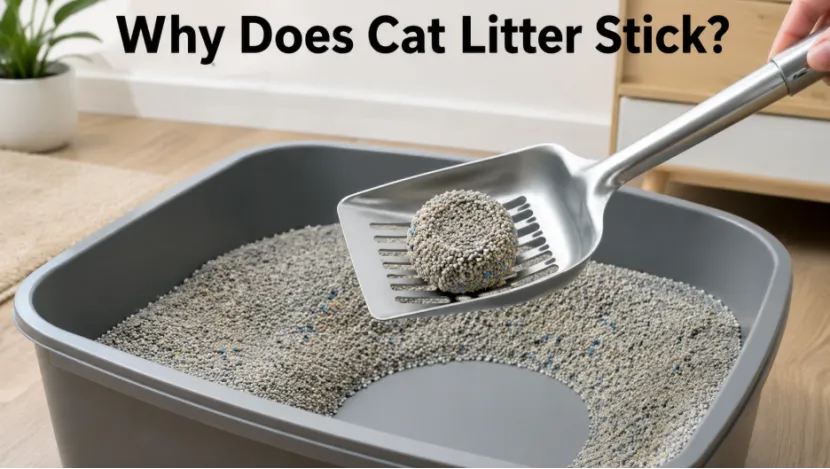
A areia para gatos grudada no fundo da caixa é mais do que um pequeno incômodo na hora da limpeza. A pá prende em um torrão achatado de urina, o torrão se quebra e a argila úmida fica presa. Logo, você tem uma camada cinza que cheira mais forte e dá bastante trabalho para remover.
Se você está se perguntando por que a areia para gatos gruda no fundo da caixa, observe o conjunto da situação. Profundidade da areia, velocidade de absorção, força dos torrões, tamanho dos grânulos, frequência da limpeza, umidade e as condições da caixa, tudo isso influencia.
Por que a areia do gato está grudando no fundo da caixa de areia?
A aderência geralmente começa quando os líquidos atingem a bandeja muito rapidamente. Uma massa sólida não consegue se formar a tempo. Os pedaços úmidos pressionam o plástico, criando uma poça grande. Assim, a areia para gatos que gruda no fundo da caixa de areia parece uma pasta grossa. Raramente forma um torrão fácil de remover.
Por que a areia de gato vira lama?
Quando a areia para gatos vira lama, as partículas absorvem líquidos. No entanto, elas não se mantêm unidas firmemente. Você pode notar... areia sanitária lamacenta no fundo da caixaAs bordas ficam moles. Migalhas sujas podem até escapar da sua colher.
Os torrões firmes e de secagem rápida geralmente são mais fáceis de remover. Uma caixa limpa e completamente seca, uma superfície lisa e a remoção regular dos torrões também reduzem os resíduos e a aderência.
1. A camada de serapilheira é muito rasa?
Uma camada de areia higiênica muito rasa oferece pouca passagem para a urina. Em vez de se formar no meio da areia, o torrão se forma diretamente contra a caixa.
Verifique a profundidade da cama
Então, qual a profundidade ideal da areia para gatos? Comece com uma camada uniforme de cerca de 5 centímetros e ajuste conforme o tamanho e os hábitos do seu gato, seguindo as instruções do produto. A profundidade correta da areia deve permitir que a urina forme torrões antes de chegar ao fundo.
Após remover a areia, preencha os espaços vazios. Os gatos costumam usar o mesmo canto repetidamente, então uma seção pode ficar rasa enquanto o resto ainda parece cheio.
2. A areia higiênica absorve a urina muito lentamente?
A velocidade de absorção da areia higiênica para gatos afeta a distância que o líquido percorre antes que os grânulos inchem e se unam. Uma absorção lenta permite que a urina se mova para baixo e se espalhe pelo fundo da caixa.
Procure por aglomeração rápida
Areia higiênica para gatos de rápida absorção O líquido deve ser retido próximo ao ponto de contato. Quando a areia para gatos continua grudando no fundo da caixa, mesmo com uma profundidade adequada, a causa pode ser a absorção lenta.
A Bastet Pet descreve sua fórmula de bentonita como sendo feita com bentonita 100% natural, proporcionando uma aglomeração rápida e eficiente. As especificações divulgadas incluem um tempo de aglomeração de três segundos, embora o desempenho real em residências possa variar de acordo com o volume de urina, a profundidade da areia e a umidade.
3. Os torrões estão muito fracos para serem retirados com uma colher?
Areia higiênica aglomerante fraca pode absorver urina, mas se desfaz ao passar a pá por baixo. Isso deixa fragmentos sujos na caixa e desperdiça areia limpa durante a remoção.
Teste de resistência dos torrões
Aguarde o tempo de formação de torrões recomendado para o produto e, em seguida, levante a areia por baixo sem sacudir imediatamente. Se os torrões se desfizerem, se espalharem ou se partirem, a fórmula pode não estar suficientemente aglutinante.
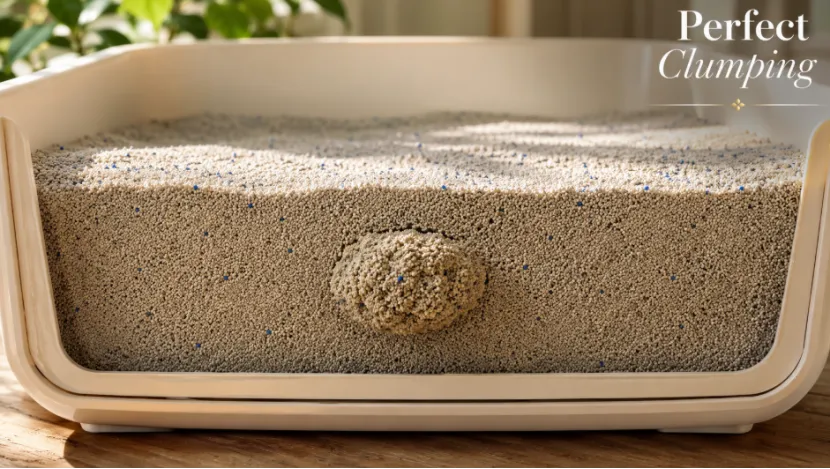
Uma areia higiênica de bentonita aglomerante e firme pode ajudar a manter os torrões de urina intactos. O objetivo não é formar um torrão duro como pedra que grude na pá. Você quer um torrão compacto que se solte facilmente e mantenha sua forma.
4. Você está recolhendo os grãos na hora errada?
Retirar a fezes muito cedo pode destruir um aglomerado antes que ele se estabilize. Deixá-la acumular por muito tempo dá à massa úmida mais tempo para se acomodar em arranhões ou ser pressionada pelo seu gato.
Encontre uma rotina prática
Se o seu gato acabou de usar a caixa de areia, espere um pouco para que o bolo de urina se forme. Em seguida, recolha com cuidado. Não deixe os bolos de urina por dias.
Quanto à frequência ideal para limpar a caixa de areia do gato, uma ou duas vezes por dia é uma rotina prática para a maioria das casas. Casas com vários gatos podem precisar de limpeza mais frequente. A remoção diária também limita o odor e evita o acúmulo de areia em torno dos torrões mais antigos.
5. O tamanho das partículas está incorreto para a fórmula?
O tamanho das partículas da areia bentonita para gatos influencia a rapidez com que os grânulos entram em contato com o líquido e a densidade com que o torrão se forma. Areias muito grossas podem deixar espaços por onde a urina pode escorrer. Partículas muito finas e soltas podem contribuir para a formação de pó ou uma textura pastosa em fórmulas mais fracas.
Escolha uma mistura equilibrada de grânulos.
O tamanho ideal dos grânulos da areia higiênica para gatos combina bom contato com líquidos e evita que a areia se espalhe. A Bastet Pet oferece partículas com diâmetro de aproximadamente 0,5 a 4 mm e disponibiliza opções de personalização em relação a partículas, cores, fragrâncias e embalagens para diferentes mercados.
6. A caixa de areia ainda estava úmida?
Mesmo uma pequena quantidade de água de limpeza pode ativar a areia nova imediatamente. A areia para gatos gruda na caixa de areia molhada pode começar antes mesmo do seu gato usá-la.
Seque completamente a caixa.
Sempre seque a caixa de areia antes de adicionar areia. Preste atenção aos cantos, junções, alças e áreas texturizadas. Uma limpeza rápida no centro nem sempre é suficiente.
Lave a caixa com sabão neutro, enxágue bem e deixe secar ao ar livre ou use uma toalha limpa. Não adicione areia nova enquanto ainda houver umidade visível sob a areia.
7. A caixa está riscada ou muito usada?
A aderência da areia para gatos à caixa de plástico costuma ser pior quando a base apresenta arranhões profundos. Partículas finas e umidade se acumulam nessas marcas, dando aos torrões macios algo para se fixarem.
Inspecione a superfície
Passe a mão sobre a caixa de areia limpa e vazia. Troque uma caixa de areia arranhada quando a superfície estiver áspera ao toque, retiver odor após a lavagem ou acumular torrões de areia repetidamente no mesmo local.
Superfícies lisas e não porosas são mais fáceis de limpar do que superfícies muito texturizadas ou danificadas. Em uma casa com vários gatos, verifique também se alguma caixa de areia está sendo usada em excesso.
Como remover areia de gato já grudada na caixa?
Quando o dano já está feito, raspar com mais força nem sempre resolve o problema. Ferramentas afiadas podem causar mais arranhões e piorar a situação, dificultando que o produto grude novamente.
Suavizar e remover os resíduos
Para aprender Como limpar areia de gato presaPrimeiro, remova toda a areia solta. Mergulhe os resíduos em água morna e, em seguida, retire-os com uma pá de plástico ou um raspador sem pontas afiadas. Lave com sabão neutro e seque a caixa completamente.
Para manchas grossas e secas, repita o processo de imersão em vez de atacar o plástico. Não é um trabalho glamoroso, é verdade, mas protege a superfície.
Como escolher uma areia para gatos que não grude?
A melhor areia higiênica para gatos que não gruda deve absorver rapidamente, formar torrões firmes e ter uma estrutura granular consistente. Não se limite à palavra "aglomerante" na embalagem.
Compare o desempenho real da limpeza
Teste se a ninhada:
- Forma aglomerados compactos antes que a urina atinja a base.
- Levanta sem quebrar ou borrar
- Deixa pouco resíduo úmido
- Produz poeira controlável
- Mantém o desempenho após vários dias.
Uma areia higiênica de bentonita com baixa emissão de poeira também pode tornar a tarefa de despejar e recolher os dejetos mais limpa. No entanto, a baixa emissão de poeira por si só não resolve o problema de aglomeração insuficiente. Ao comparar produtos, teste ambas as características.
Como a Bastet Pet resolve o problema dos grumos pegajosos?
Para varejistas e importadores, os grumos pegajosos frequentemente se tornam um problema de recompra. Os clientes podem descrever o produto como desorganizado ou desperdiçador, mesmo quando seu controle de odores é aceitável.
A Bastet Pet é uma fabricante e exportadora de areia higiênica para gatos, oferecendo fórmulas à base de bentonita, tofu, minerais, mandioca e cristais. Sua linha de bentonita apresenta aglomeração rápida, baixa poeira, baixa aderência às patas, partículas desodorizantes e opções de grânulos de 0,5 a 4 mm. A empresa também oferece amostras grátis, opções de fragrâncias e cores, diversos formatos de embalagem e suporte para OEM e ODM. Essas características a tornam uma opção prática para o seu negócio. fornecedor de lixo de gatos de bentonite Para compradores que estão testando areia higiênica bentonítica para gatos de marca própria antes de um lançamento em grande escala.
FAQ
P1: Por que a areia para gatos gruda no fundo da caixa?
A: A areia para gatos gruda no fundo da caixa de areia quando a camada é muito fina. Líquidos podem penetrar lentamente e os torrões podem se desfazer com facilidade. Bandejas arranhadas ou úmidas também causam esse problema.
P2: Como evitar que a areia do gato grude na caixa?
A: Mantenha uma camada espessa. Compre areia higiênica de aglomeração rápida. Deixe as poças úmidas secarem um pouco antes de limpar. Remova os dejetos diariamente. Só coloque areia na bandeja quando ela estiver completamente seca.
P3: Qual deve ser a profundidade da areia para gatos?
A: Comece com cerca de 5 centímetros e ajuste de acordo com a preferência do seu gato, o volume de urina e as instruções da areia.
Q4: Por que a areia aglomerante para gatos vira lama?
A: A areia pode estar absorvendo muito lentamente, aglutinando pouco, ficando sobrecarregada com urina ou em contato com uma superfície úmida da caixa.
Q5: Qual é a melhor areia higiênica para gatos que não gruda?
A: Escolha uma fórmula de rápida absorção que produza torrões firmes e intactos e deixe pouco resíduo durante a remoção diária.