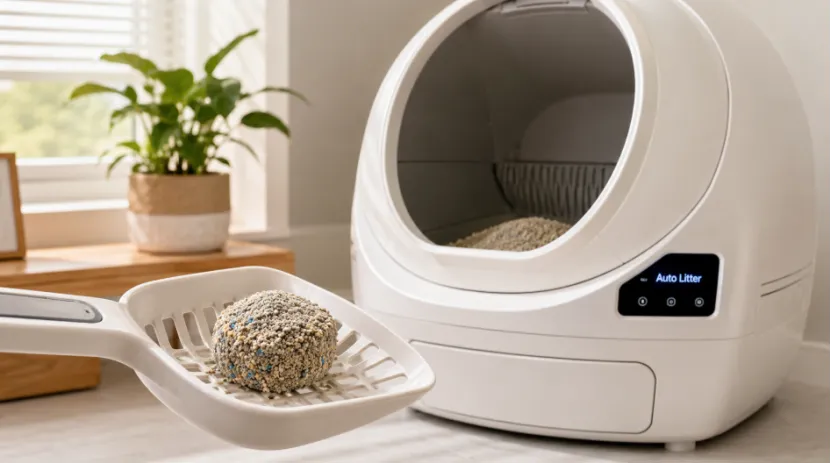
Escolhendo Areia bentonítica para caixas de areia automáticas Não basta apenas encontrar um saco com a etiqueta “aglomerante”. A areia precisa passar pela tela da máquina, formar um torrão estável antes do início da limpeza e deixar muito pouca poeira ao redor dos sensores ou das partes móveis.
A melhor areia para gatos para uso em caixas de areia automáticas não deve se espalhar pelo tambor, travar o rastelo ou enviar grânulos utilizáveis para a gaveta de resíduos. Uma máquina que joga fora a areia limpa está tecnicamente limpando, mas não de forma muito prática.
Antes de comprar, verifique o manual do aparelho e compare-o com as especificações da areia de bentonita para caixas de areia automáticas que você pretende usar.
A areia de bentonita funciona em caixas de areia automáticas para gatos?
Na maioria dos casos, sim. Uma areia de bentonita adequada para uso em caixas de areia autolimpantes pode formar torrões densos que podem ser separados da areia limpa por tambores rotativos, rastelos mecânicos e peneiras. O desempenho real ainda depende do tamanho dos grânulos, da profundidade da camada de areia, da umidade, da poeira e da consistência dos torrões.
Verifique o mecanismo de limpeza.
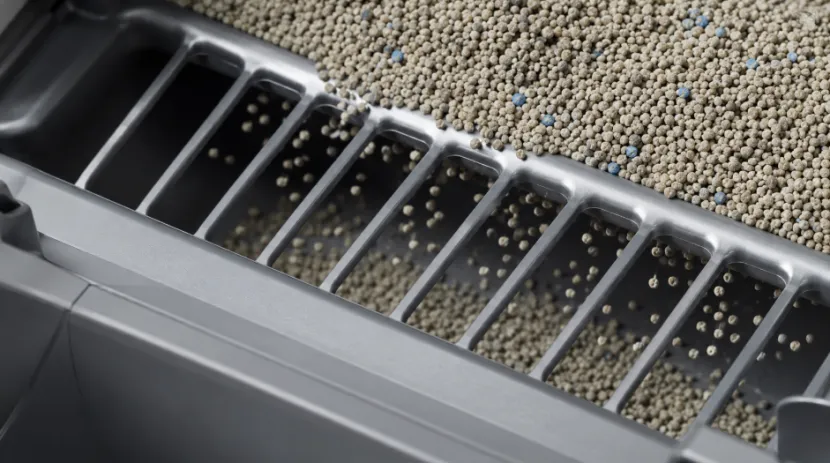
Máquinas rotativas passam a cama seca por uma peneira, enquanto direcionam os resíduos maiores para uma gaveta. Sistemas de rastelo empurram os torrões para um compartimento. Bandejas de peneiramento permitem que as partículas soltas caiam através de orifícios.
Para cada modelo, a areia compatível com caixas de areia automáticas deve se movimentar de forma previsível. Partículas leves podem se espalhar. Grânulos muito grandes podem ficar retidos acima da tela. Aglomerados úmidos e pegajosos podem grudar no forro ou no rastelo.
Qual o tamanho ideal do grânulo para uma caixa de areia automática?
Não existe um tamanho de grânulo ideal para caixas de areia automáticas. É preciso escolher um tamanho que seja compatível com a abertura da tela da máquina e com o seu mecanismo de limpeza.
Comparação entre grânulos finos e grossos
A areia higiênica de grãos finos para caixas de areia automáticas costuma ser absorvida rapidamente e forma torrões mais compactos. Também pode passar com mais facilidade por telas menores. A desvantagem é que o excesso de material fino pode aumentar a poeira e o espalhamento pelos rastros.
Areia mais grossa pode produzir menos poeira visível e ficar menos tempo nas patas, mas pedaços grandes podem ficar presos em telas estreitas. Também podem criar espaços que permitem que a urina penetre mais fundo antes de formar um torrão. As orientações do setor descrevem a mesma relação básica: grânulos finos tendem a formar torrões mais firmes, enquanto grânulos grossos podem reduzir a poeira e o espalhamento.
Ajuste o tamanho das partículas à tela.
Verifique o tamanho da tela da caixa de areia automática antes de escolher uma especificação. Despeje uma quantidade medida de areia seca pela tela e anote a quantidade que passa sem obstruir a passagem. Se os grânulos normais ficarem retidos, provavelmente o tamanho das partículas da areia de bentonita para gatos é muito grande.
Uma granulometria média-fina controlada geralmente oferece um equilíbrio sensato. Mesmo assim, teste a máquina na prática. As fotos do produto não mostram se um grânulo de formato irregular ficará de lado em uma das ranhuras.
Qual a velocidade ideal de aglomeração da areia bentonita para gatos?
Uma areia aglomerante de rápida formação para sistemas automáticos de caixas de areia deve conter o líquido rapidamente, mas a primeira reação visível é apenas parte do processo. O torrão também precisa se estabilizar antes que o mecanismo o movimente.
Ajuste o tempo de aglomeração ao ciclo.
O tempo de aglomeração automática da areia deve corresponder à configuração de atraso da máquina. Quando o ciclo de limpeza começa muito cedo, a areia molhada pode se espalhar pelo forro ou se desfazer na tela.
Muitos sistemas automáticos utilizam um atraso no ciclo da caixa de areia para que os torrões tenham tempo de se formar. Torrões que demoram a se formar podem deixar resíduos ou retornar fragmentos contaminados para a cama de areia limpa.
Para uma verificação prática, adicione a mesma quantidade de líquido a cada amostra e inspecione-a após 1, 3 e 5 minutos. Bastet PetO próprio teste de resistência dos torrões de areia para gatos da marca recomenda comparar primeiro a velocidade de compactação, depois a integridade da pá e os resíduos no fundo.
Qual deve ser a dureza dos torrões?
A areia aglomerante ideal para caixas de areia automáticas produz resíduos compactos que resistem à rotação ou à remoção com pá sem se transformarem em um bloco grande demais.
Evite torrões moles ou pesados.
Em sistemas automáticos de caixas de areia para gatos, os torrões macios podem se partir, espalhar e revestir a tela. Torrões excessivamente úmidos podem ficar pegajosos e pesados, dificultando a movimentação do mecanismo.
Para comparar a resistência dos torrões de bentonita, levante cada torrão de teste com a mesma pá, agite-o suavemente três vezes e registre rachaduras, migalhas e resíduos úmidos. Um bom resultado é aquele em que o torrão se mantém unido, mas não retém uma grande quantidade de material não utilizado.
Por que a baixa emissão de poeira é importante em uma caixa de areia automática?
A Areia higiênica de baixa poeira para caixa de areia automática O uso não se resume apenas a manter os pisos próximos limpos. As unidades automáticas contêm mais cantos fechados, telas, sensores, trilhos e juntas do que uma bandeja básica.
Observe os sensores e as peças móveis.
Partículas finas podem se acumular em componentes de pesagem, áreas ópticas, rastelos ou bandejas de peneiramento. O acúmulo prolongado de poeira de areia para gatos nos sensores pode reduzir a confiabilidade do sistema, enquanto a poeira ao redor de peças móveis adiciona mais uma tarefa de manutenção.
Baixa quantidade de poeira não significa necessariamente areia muito grossa. Peneiramento, remoção de poeira, dureza dos grânulos e resistência ao transporte também são importantes. Um grânulo frágil pode sair da fábrica com aparência fina e chegar com pó no fundo do saco.
A areia de bentonita pode entupir uma caixa de areia automática?
O entupimento dos mecanismos automáticos das caixas de areia para gatos geralmente está relacionado a partículas incompatíveis, excesso de areia, resíduos pegajosos ou acúmulo de lixo, e não apenas à bentonita.
Fique atento aos sinais de alerta.
Os sinais comuns incluem:
- Areia presa na tela da caixa de areia automática.
- Grânulos limpos entrando na gaveta de resíduos
- Um ancinho parando no meio do caminho.
- O tambor que devolve os resíduos quebrados à cama de dejetos.
- Erros repetidos do sensor ou do peso
- A caixa de areia automática não está peneirando a areia uniformemente.
Verifique primeiro a linha de enchimento. Excesso de areia aumenta a carga e pode interferir na separação dos grãos. Pouca areia permite que a urina chegue à base, onde pode formar torrões achatados e pegajosos.
A Areia bentonítica para gatos com baixa aderência Pode ajudar a manter a área circundante mais limpa, mas não escolha partículas muito grandes apenas para reduzir o rastro. A compatibilidade com a tela vem em primeiro lugar.
Como testar a areia para gatos antes de trocar completamente?
Um breve teste com areia para caixa de areia automática pode evitar o desperdício de sacos, a sujeira nas máquinas e as reclamações dos clientes.
Realizar um ensaio controlado
Limpe a máquina, encha apenas até a linha marcada e utilize o atraso normal. Durante três a sete dias, registre:
- Passagem com tela de cama seca
- Tempo de formação de aglomerados
- Quebra de torrões
- Resíduos de tela e revestimento
- Poeira perto dos sensores
- Lixo limpo entrando na gaveta de lixo
- Rastreamento fora da unidade
Para projetos comerciais, compare várias amostras nas mesmas condições. Repita o teste após o transporte, pois a vibração pode gerar partículas finas adicionais.
Como a Bastet Pet oferece suporte a aplicativos de caixas de areia automáticas?
A Bastet Pet fabrica e exporta diversos tipos de areia para gatos e afirma utilizar uma equipe de desenvolvimento interna, equipamentos de produção avançados e testes de qualidade em nível de lote. A empresa também oferece produtos e embalagens personalizados para projetos de marca própria.
A linha de bentonita da Bastet Pet é descrita como 100% natural, com aglomeração rápida em três segundos, quatro processos de remoção de poeira, 99% de eficácia livre de poeira, aglomeração forte, baixa formação de rastros e amostras grátis. As opções de produto incluem fragrância, cor, embalagem e especificações de partículas de aproximadamente 0,5 a 4 mm personalizadas. Essas características fazem da Bastet Pet uma opção prática. fornecedor de areia para gatos compatível com caixa de areia automática Para compradores que desenvolvem marcas próprias de areia higiênica bentonítica para gatos.
Antes de fazer um pedido em grande quantidade, solicite amostras de areia para gatos com diferentes tamanhos de grânulos e teste-as no dispositivo em questão.
FAQ
P1: Posso usar areia de bentonita em uma caixa de areia automática?
R: Normalmente, sim. Escolha areia aglomerante que seja compatível com a tela, o peso, o nível de enchimento e o mecanismo de limpeza da máquina.
Q2: Qual o tamanho ideal do grânulo para uma caixa de areia automática?
A: Os grânulos devem passar pela tela do dispositivo sem gerar poeira em excesso. Uma especificação média-fina controlada geralmente funciona bem, mas cada máquina precisa ser testada.
P3: Por que minha caixa de areia automática está espalhando os torrões de areia?
A: Os grumos podem estar se formando muito lentamente, permanecendo muito macios ou sendo limpos antes de endurecerem completamente.
Q4: A poeira da areia para gatos pode danificar os sensores automáticos das caixas de areia?
A: O pó pode acumular-se nos sensores e nas peças móveis, o que pode afetar a fiabilidade e aumentar a necessidade de limpeza.
Q5: Como os compradores devem testar a areia de bentonita para gatos em caixas de areia automáticas?
A: Teste a passagem pela tela, a velocidade de aglomeração, a dureza dos torrões, a poeira, os resíduos, o rastreamento e a perda de areia limpa em ciclos repetidos.