Low-dust claims are useful only when a buyer can see the test behind them. Mineral Cat Litter can create fine particles during crushing, screening, filling, handling, and transport. A supplier report should therefore show the method, sample, conditions, and result. This guide explains what procurement teams should request before approving a shipment.
What Does Dust Mean in Mineral Cat Litter?
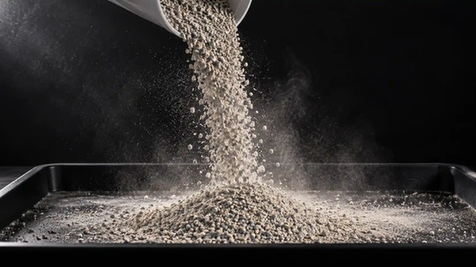
Dust is not one single measurement. It may mean visible powder on the bag, fine particles mixed into the granules, or particles released into the air while the product is poured. These forms can change at different points in the supply chain.
Particle size is important because smaller particles remain airborne longer. The EPA explains the difference between larger inhalable particles and smaller fine particles, which is useful background when reviewing a supplier’s particle data. A report that only says “low dust” does not tell you which fraction was measured.
For procurement, define the product type, granule size, sample mass, and dust fraction before comparing results. A test for coarse bentonite granules should not be treated as identical to a test for fine mineral powder or crystal litter.
Why Should Buyers Request a Dust Test?
A documented dust test helps buyers compare suppliers, control packaging complaints, and check whether production batches remain consistent. It also gives the factory a clear target that replaces an informal promise.
Dust can affect several parts of the purchase decision:
Cleanliness of retail bags and cartons
Dust released during pouring and scooping
Warehouse residue and worker comfort
Fine material settling at the bottom of a bag
Customer complaints after delivery
Changes caused by vibration, drops, and long transport
The result is most useful when it is linked to a defined acceptance limit. Do not approve a product only because its marketing page uses “99% dust-free” language.
Which Mineral Cat Litter Types Need Dust Testing?
Every mineral product should have a dust-control method, but the risk may appear differently by material.
Bentonite Cat Litter
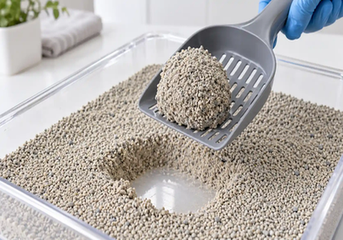
Bentonite is often crushed, screened, dried, and moved through several handling points. Fine particles may collect around broken granules or at the bottom of the bag. Record whether the product uses small, medium, or large granules, and note whether the shape is rounded or irregular.
Buyers can compare the material and formats in Bastet’s mineral cat litter range while keeping the exact SKU and batch number in the test record.
Non-Clumping Mineral and Crystal Formats
Non-clumping clay may produce fines during crushing and packing. Crystal formats can chip during filling or transport. Their dust profile may not match bentonite, so use the same reporting fields but avoid assuming that one pass limit fits every material.
Which Dust Test Methods Should a Supplier Use?
The best method depends on the buyer’s risk and available equipment. A simple screening test can compare samples, while laboratory analysis can identify particle-size fractions more precisely.
Pouring or Shaking Test
This is a practical incoming-quality check. The supplier should state the sample weight, container, pouring height, movement, test time, and lighting. A buyer can record visible dust, residue on a dark surface, and dust released during a fixed pour.
The method is useful for ranking samples, but it is sensitive to operator movement. Use the same person or a fixed device for repeat tests. Take photographs and keep the original samples.
Weight-Based Dust Collection
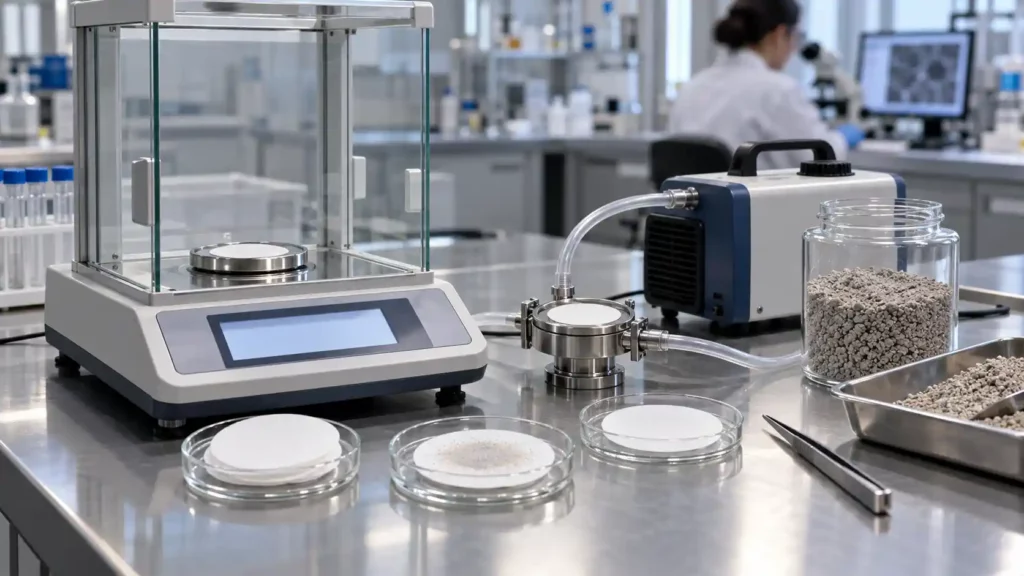
A filter, tray, or collection surface can capture released fines. The report should state the collection material, test duration, sample mass, balance resolution, and cleaning procedure. Results should include the unit, such as milligrams per test or a percentage of sample weight.
Weight data is easier to compare than a visual score, but only when the test setup is identical. A different filter, airflow, or sample mass can change the result.
Particle-Size and Airborne Measurement
Laboratories may use sieving, image analysis, or an airborne particle counter. Ask which fraction was measured and whether the result describes total fines or airborne release. If the report includes a threshold such as particles below a stated micrometer size, that threshold must remain the same across suppliers.
Do not combine a sieve result and an airborne result as though they were the same number. They answer different questions.
Packaging and Transport Simulation
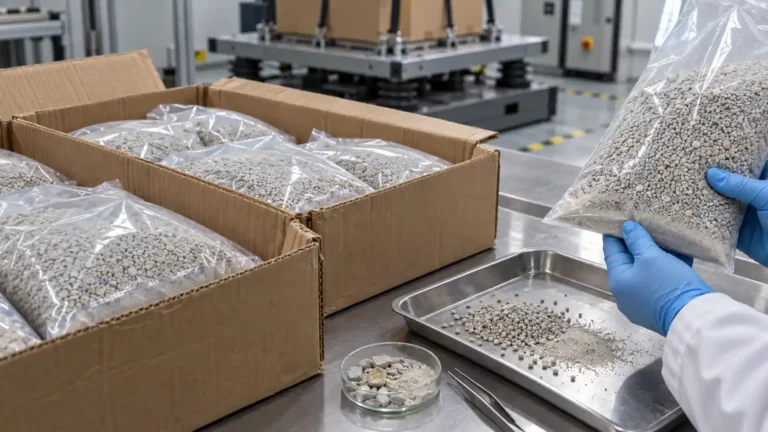
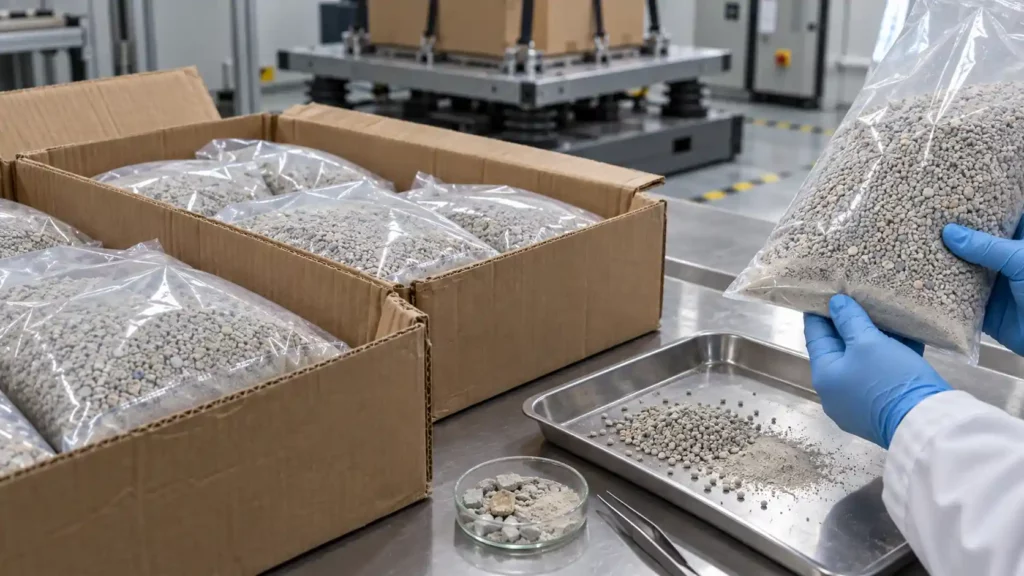
A product can pass a factory test and still release fines after vibration or long-distance handling. Ask the supplier to compare a packed sample before and after a defined drop, vibration, or transport simulation. Record broken granules, bottom-bag powder, seal leakage, and dust released when the bag is opened.
What Should a Dust Test Report Include?
Request a report that another laboratory or receiving team can understand from the document itself. At minimum, it should list:
Product name, material type, SKU, and batch number
Granule size range and sample mass
Sampling point and packaging status
Test method and equipment
Test duration, movement, airflow, or pour height
Temperature and humidity when relevant
Dust fraction or particle-size threshold
Unit of measurement and detection limit
Number of repeats, average, and result range
Photographs or notes for visible residue
Acceptance limit and pass/fail decision
If a supplier changes the test method, request a new baseline. A lower number from a different method does not prove that the product improved.
How Should Buyers Set a Dust Specification?
Set the specification after reviewing several representative samples. Do not base it on one unusually clean bag. Test at least three batches when possible. Keep the same sample mass, container, motion, and observation time.
Separate internal screening from the supplier’s formal release test. Your screening method can be simple, but it should be repeatable. The formal specification should identify the method, limit, and corrective action when a batch fails.
For bentonite, buyers may also compare dust with granule strength, clumping behavior, and fines after transport. Review Bastet’s bentonite cat litter options by SKU because each product can have a different dust profile.
How Do Packaging and Shipping Change Dust Results?
Packaging is part of dust control. Weak seals can release powder into cartons, while excessive empty space can increase granule breakage during movement. Ask for the bag material, seal specification, fill weight tolerance, and pallet arrangement.
Keep a sealed reference sample from the approved batch. On arrival, compare the reference with the shipped sample. Check the bottom of the bag, corners of the carton, broken granules, and visible residue after opening. Crystal products may need a separate check for chipped pieces; Bastet’s silica crystal litter formats can be reviewed by size and format before setting the comparison plan.
What Questions Should Buyers Ask a Supplier?
Send these questions before placing a purchase order:
Which dust method and equipment do you use?
Do you report visible dust, total fines, airborne particles, or more than one measure?
What particle-size threshold and unit are used?
How many batches support the stated result?
Was the sample tested before or after retail packaging?
Can you provide the COA, SDS, and retained-sample procedure?
What corrective action applies when dust exceeds the limit?
Can you repeat the test after transport simulation?
The answers should match the specification on the quotation and purchase order. If a number appears without a method, treat it as incomplete information.
How Bastet Can Support Buyer Quality Checks
BASTET (Tianjin) Pet Products Co., Ltd. lists mineral, bentonite, tofu, cassava, and crystal cat litter categories. Its company information describes production, product development, raw-material selection, batch quality control, testing, and OEM/ODM customization. Buyers can use a written dust specification to align the approved sample, selected pack format, and future production batches. Bastet’s cat litter product and OEM options provide a starting point for discussing material, packaging, and customization requirements.
FAQ
Q1: What is a good dust level for Mineral Cat Litter?
A: There is no single limit for every mineral type or test method. Request a defined unit, particle fraction, test setup, and acceptance limit. Compare samples tested under the same conditions.
Q2: How is cat litter dust measured?
A: Common approaches include visual scoring, collected dust by weight, sieve or image analysis, and airborne particle measurement. Each method measures a different part of the dust problem.
Q3: Is bentonite cat litter dusty?
A: It can release fines during crushing, screening, filling, or transport. Dust depends on granule size, moisture, handling, packaging, and batch control. Test the exact SKU and batch you plan to buy.
Q4: Should buyers test dust after shipping?
A: Yes, when transport is long or handling is heavy. Compare a sealed reference sample with the delivered batch and record broken granules, bottom-bag fines, and opening dust.
Q5: What should a supplier include in a dust test report?
A: Request product and batch identity, sample mass, granule size, test method, equipment, conditions, dust fraction, units, repeat results, acceptance limit, and corrective action.