Two bags of Mineral Cat Litter can look alike but behave differently after liquid is added. One may form a firm clump; another may leave a wet pool or break apart. A repeatable test helps buyers compare samples before approval. Keep conditions steady and record how each specification was measured.
What Should a Mineral Cat Litter Test Measure?
A useful test separates liquid handling from clump handling. It shows how fast liquid leaves the surface, whether it reaches the base, whether a clump lifts cleanly, and how much material breaks away.
Absorption, Clumping, and Bottom Sticking
Absorption time runs from liquid contact to the point when no visible pool remains. Surface spread shows how far the liquid travels. Runoff or a wet base shows that the upper layer did not hold the full load.
Clumping needs separate measurements. Record the time needed for a firm mass to form, then check its lift, cracks, and loose fragments. Bottom sticking matters because a wet layer bonded to the pan creates extra cleaning work.
Different mineral materials need different standards. Sodium bentonite is commonly judged by clump speed and strength. Non-clumping clay needs a saturation and replacement check. Silica gel crystal litter holds moisture in pores, so retained wetness, surface dryness, and change routine matter more than a scoopable clump score.
What a Buyer Can and Cannot Conclude
A bench test ranks samples under set conditions. It cannot prove cat acceptance in every litter box. Use it with a supplier specification, a COA, and a repeat sample.
What Tools and Test Conditions Do You Need?
Consistent tools matter more than expensive tools. Use the same container, litter depth, liquid volume, pour height, wait time, and room conditions for every sample.
Basic Materials
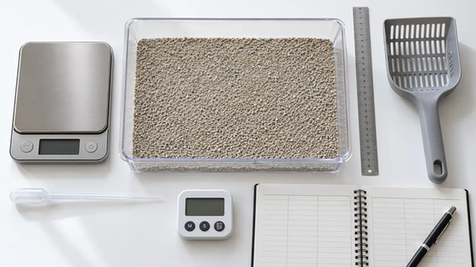
Prepare an identical litter pan, kitchen scale, syringe or pipette, timer, scoop, labels, and camera. A ruler sets fill depth. Keep a notebook or spreadsheet.
Water works for a basic screen. Some approved protocols use 0.9% saline for a closer liquid comparison. Choose one liquid and keep it unchanged across samples. Clean and dry tools before each repeat.
For a starting point, compare the materials and formats listed in Bastet’s mineral cat litter range and record the exact product name, batch, and granule size before testing.
Standardize the Setup
Write down material, particle-size range, batch number, fill depth, liquid type and volume, temperature, and humidity. Level the litter gently; compression changes spaces between granules.
Use the same application pattern for each sample. A steady pour suits screening; a controlled drip helps compare clump strength. Run at least three repeats and report the range and average.
How Do You Test Absorption Speed?
The pour or drip test measures how quickly liquid leaves the surface and how much remains. Keep liquid volume fixed and report it with the result.
The Pour or Drip Test
Fill the clean container to the selected depth.
Level the surface and leave it loose.
Measure a fixed volume of water or approved saline.
Apply the liquid from the same height or at the same drip rate.
Start the timer when the liquid first touches the litter.
Record the time when the surface looks dry.
Note pooling, spreading, runoff, and wet material below the test area. Photograph the surface and bottom after the selected wait time.
Use the same volume for every sample. Do not turn one home-test result into a universal pass mark. Agree on an acceptance limit that fits the material and intended use.
Optional Weight and Retained-Liquid Check
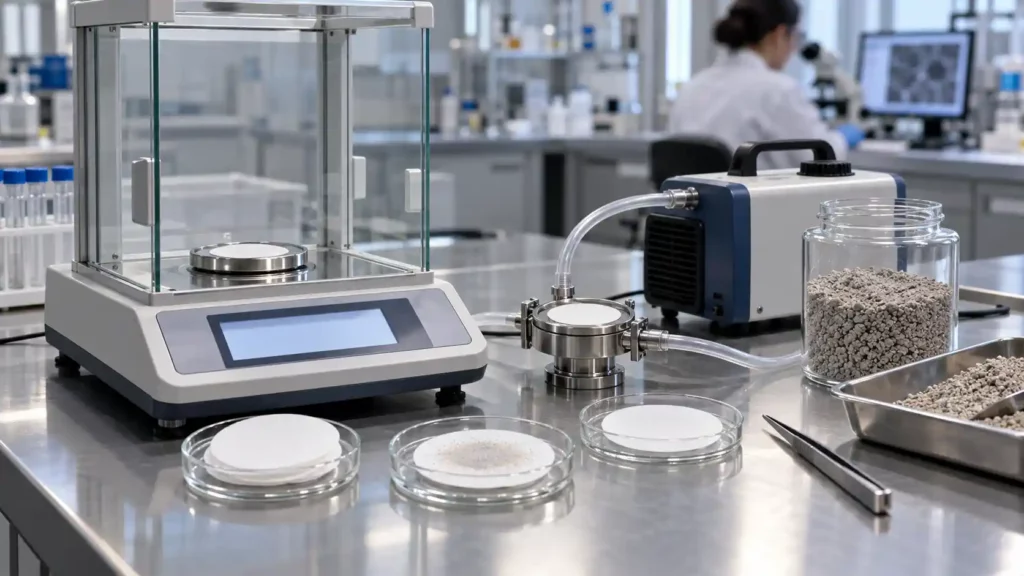
When mass comparison is needed, weigh dry litter, add the fixed liquid volume, wait, and weigh again. Record drainage below the test layer. Keep evaporation and wait time consistent, then pair weight with visual and mechanical checks.
How Do You Test Clump Strength?
A clump test starts after a fixed wait. It checks clean lifting, stability during light movement, and cracks at the edges or base.
Lift, Shake, and Drop Checks
Wait the chosen time before lifting every sample. Slide the scoop under the clump and record bottom sticking. Lift it to a fixed height and observe edge loss. Shake the scoop with the same movements for each repeat.
If included, use a fixed drop height and tray. Record whether the clump stays intact, cracks, fractures, or leaves fragments. Weigh intact and loose pieces when required.
For a material comparison, review Bastet’s bentonite cat litter options and record whether each sample uses crushed or rounded granules. Shape, size, moisture, and binder details can change the test result.
Test Non-Clumping and Crystal Materials Correctly
Assess non-clumping clay by saturation, wet-zone spread, odor after the set time, and replacement amount. A clump score does not describe its normal use.
Silica gel crystal litter should be checked for liquid disappearance, retained wetness, surface feel, tracking, and change interval. Review the silica crystal litter formats when comparing crystal sizes or formats. Use the same liquid load and observation time across samples.
How Should You Record and Compare Results?
A short scorecard turns observations into a purchasing record. Keep raw results, averages, photos, and failed repeats for review.
Suggested Scorecard Fields
| Field | What to record |
|---|---|
| Sample identity | Material, batch, granule size, supplier |
| Test conditions | Container, fill depth, liquid, volume, temperature, humidity |
| Absorption | Time, pooling, spread, runoff |
| Clump result | Wait time, lift result, cracks, fragments, bottom sticking |
| Weight result | Dry sample, clump, loose fragments when used |
| Dust | Visible dust during pouring and scooping |
| Repeatability | Number of repeats and result range |
| Decision | Pass, hold, or request supplier clarification |
Retest After Shipping or Storage
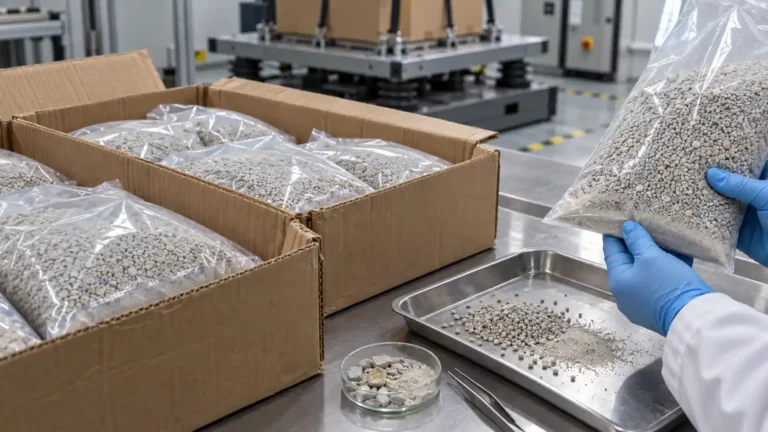
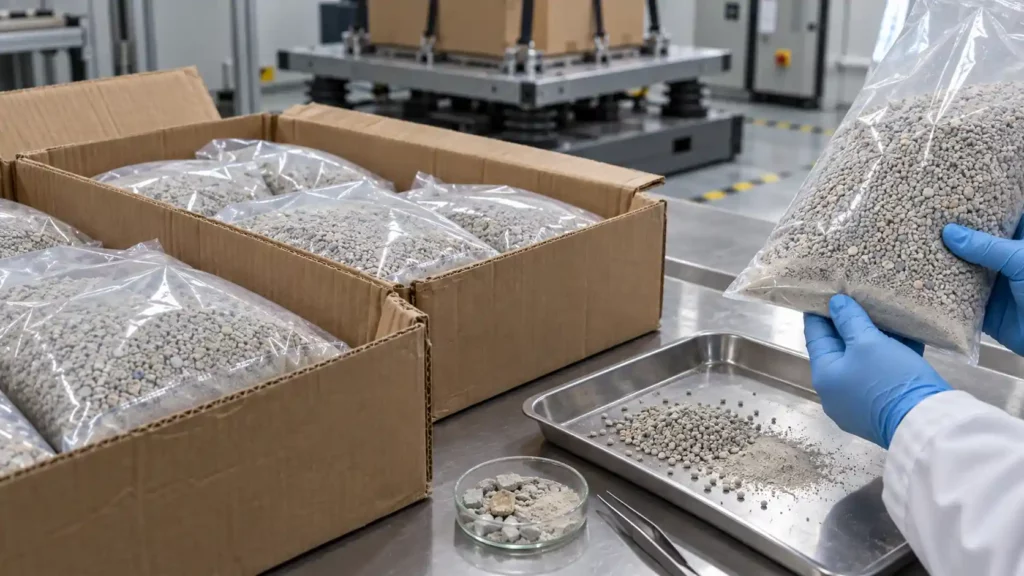
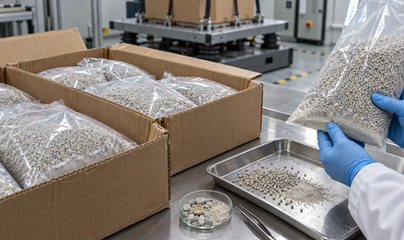
Keep a sealed reference sample. Compare it with the first production and post-shipping samples for broken granules, fines, moisture, and clump changes. Retest after storage exposure when humidity or long transport may matter.
What Should You Ask the Supplier Before Ordering?
A sample result helps procurement when the supplier states the method behind each number. Request material, particle-size range, moisture, absorption method, clump time and strength method, dust limit, and batch tolerance.
Supplier Specification Checklist
Ask for these items in writing:
Declared mineral type and additives.
Particle-size distribution and fines limit.
Moisture and bulk-density range.
Absorption method and result.
Clumping time and strength method, when applicable.
Dust test and acceptance limit.
Odor test conditions when an odor claim is supplied.
Net-weight tolerance and packaging seal requirement.
Sample, production batch, and retained-sample procedure.
The cat litter product and OEM options can help buyers organize a brief around material, pack format, and customization. Confirm the final specification for the selected SKU before ordering.
How Bastet Can Support Mineral Cat Litter Development
BASTET (Tianjin) Pet Products Co., Ltd. manufactures and exports cat litter, including mineral, bentonite, tofu, cassava, and crystal types. Its listed support includes production, development, batch testing, raw-material selection, and OEM/ODM customization for packaging, fragrance, color, logo, and product development. A written test plan helps compare the approved sample with future batches.
FAQ
Q1: How much liquid should you use when testing mineral cat litter absorption?
A: Use a fixed volume that matches your screening method. Water is simple, while 0.9% saline may provide a closer liquid simulation. Keep volume and application pattern constant.
Q2: How long should mineral cat litter sit before you test the clump?
A: Choose one waiting period for every sample. A short period shows early strength; a longer period shows stability. Record the time and follow the acceptance protocol.
Q3: Is mineral litter the same as clumping litter?
A: No. Mineral litter describes a material group. Sodium bentonite can form clumps. Other clay products absorb liquid and do not form clumps, while silica gel crystals hold moisture in pores. Match the test to normal product behavior.
Q4: Does silica cat litter clump?
A: Most silica gel crystal litter uses moisture retention and change routine as its main measures. Check the product instructions, then test liquid disappearance, wetness, tracking, and the planned replacement interval.
Q5: What should a supplier include in a mineral cat litter test report?
A: Request material type, particle-size range, moisture, liquid and volume, absorption method, wait time, clump-strength method, dust limit, repeat results, and batch identification. These details make results comparable.