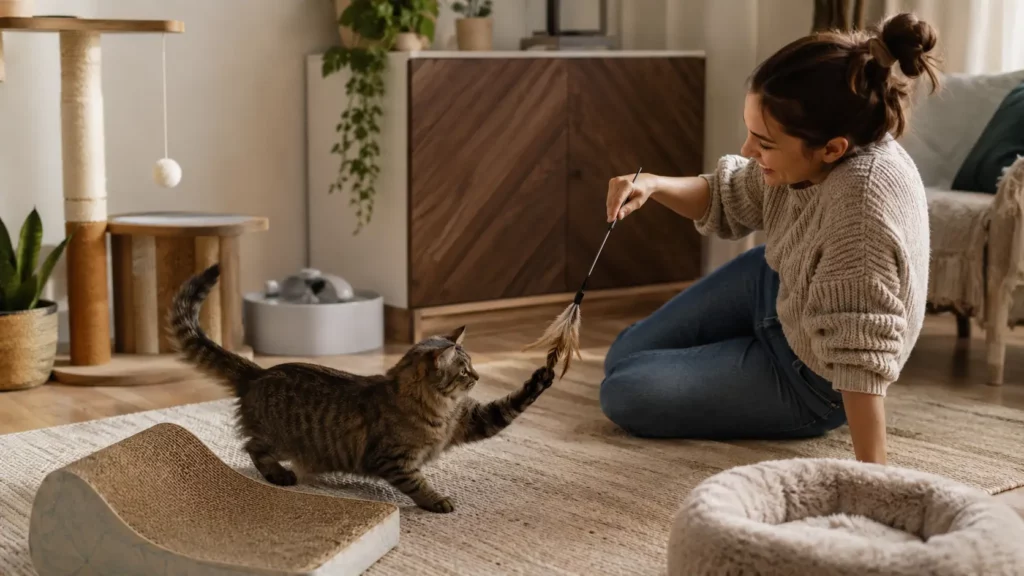
A Cat Tree fits many indoor homes because one freestanding unit can provide climbing levels, a resting spot, and, in some designs, a scratching surface. Cat shelves fit homes with usable wall space and a settled plan for a mounted climbing route. Your cat’s movement, the room layout, and the number of cats sharing the space should guide the choice.
The AAFP and ISFM Feline Environmental Needs Guidelines describe raised areas as part of a cat’s vertical environment. They give cats a place to watch their surroundings and rest.
Is a Cat Tree or Cat Shelves Better for Your Cat?
Choose a Cat Tree when you want climbing, rest, and scratching features within one floor-standing item. It fits homes with a suitable floor footprint and rentals with limits on drilling.
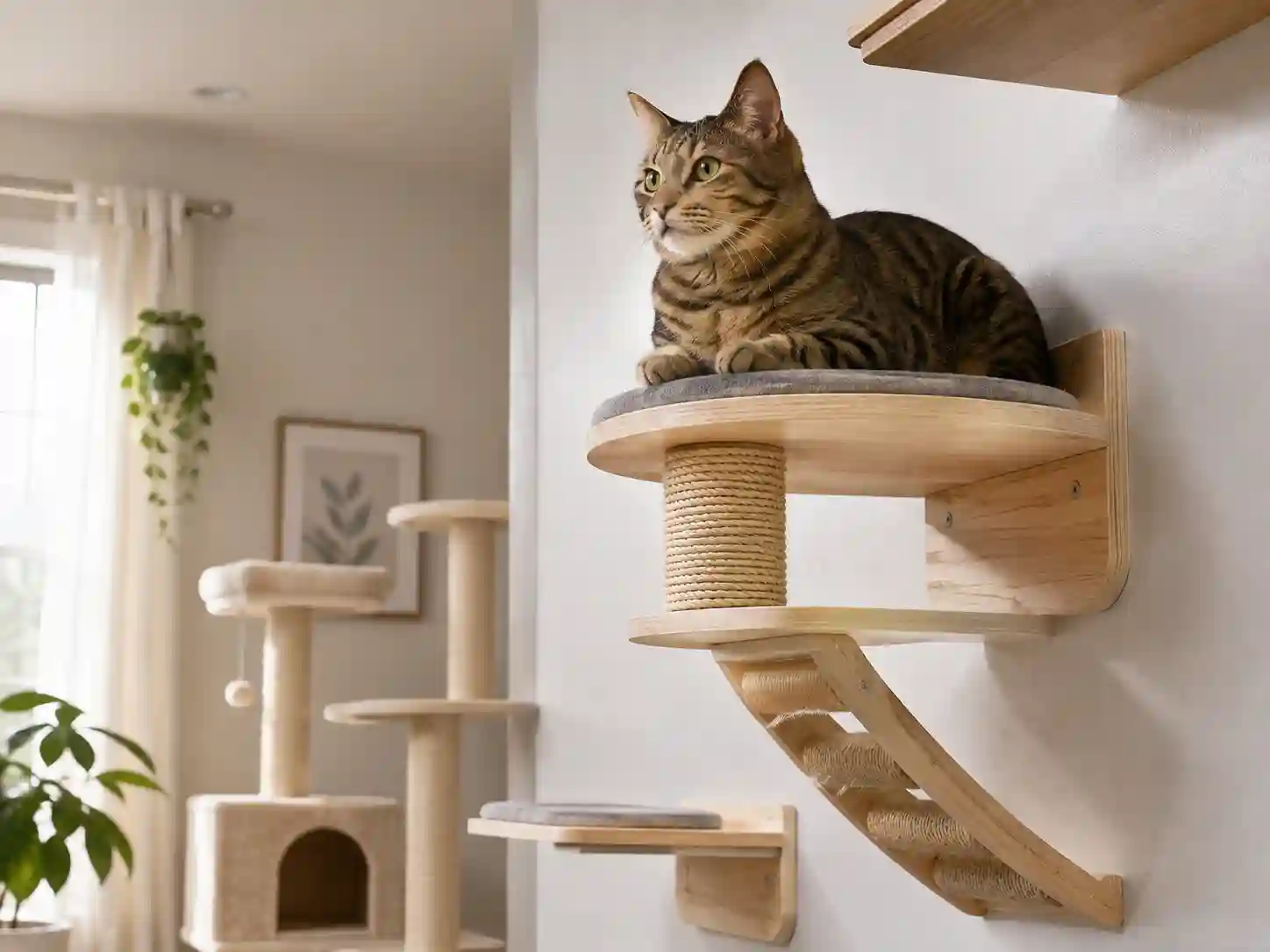
Choose cat shelves when a long wall route matches the room and the household can plan the mounting work. The cat needs a safe way to reach, leave, and pause along that route.
What Is the Difference Between a Cat Tree and Cat Shelves?
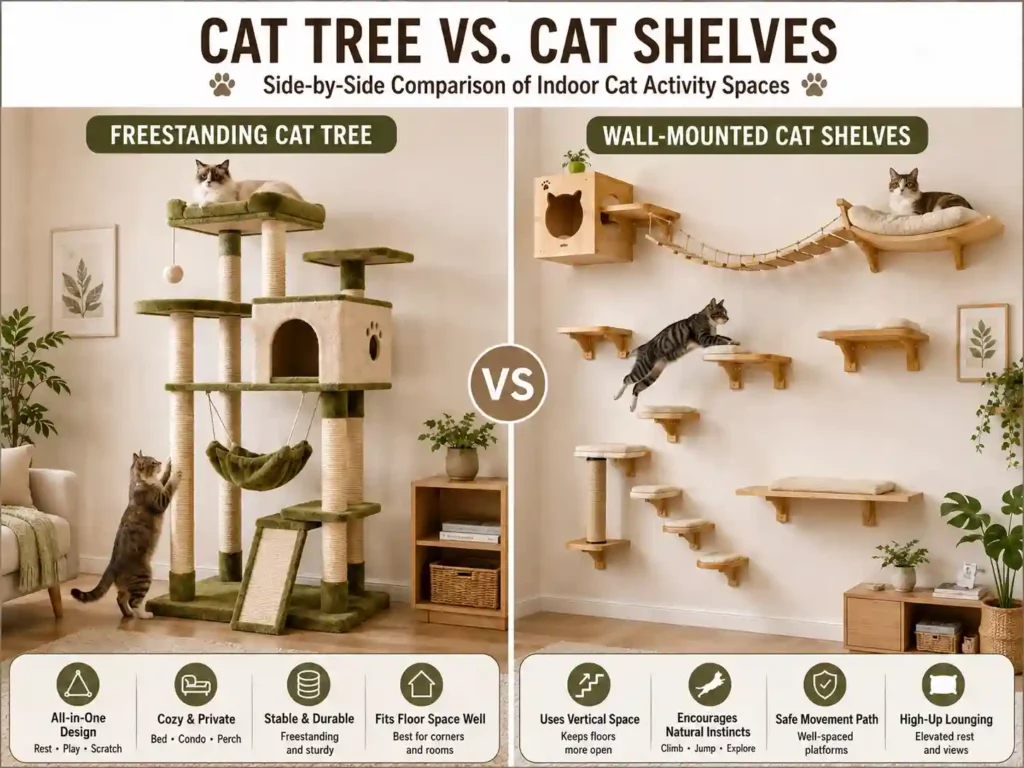
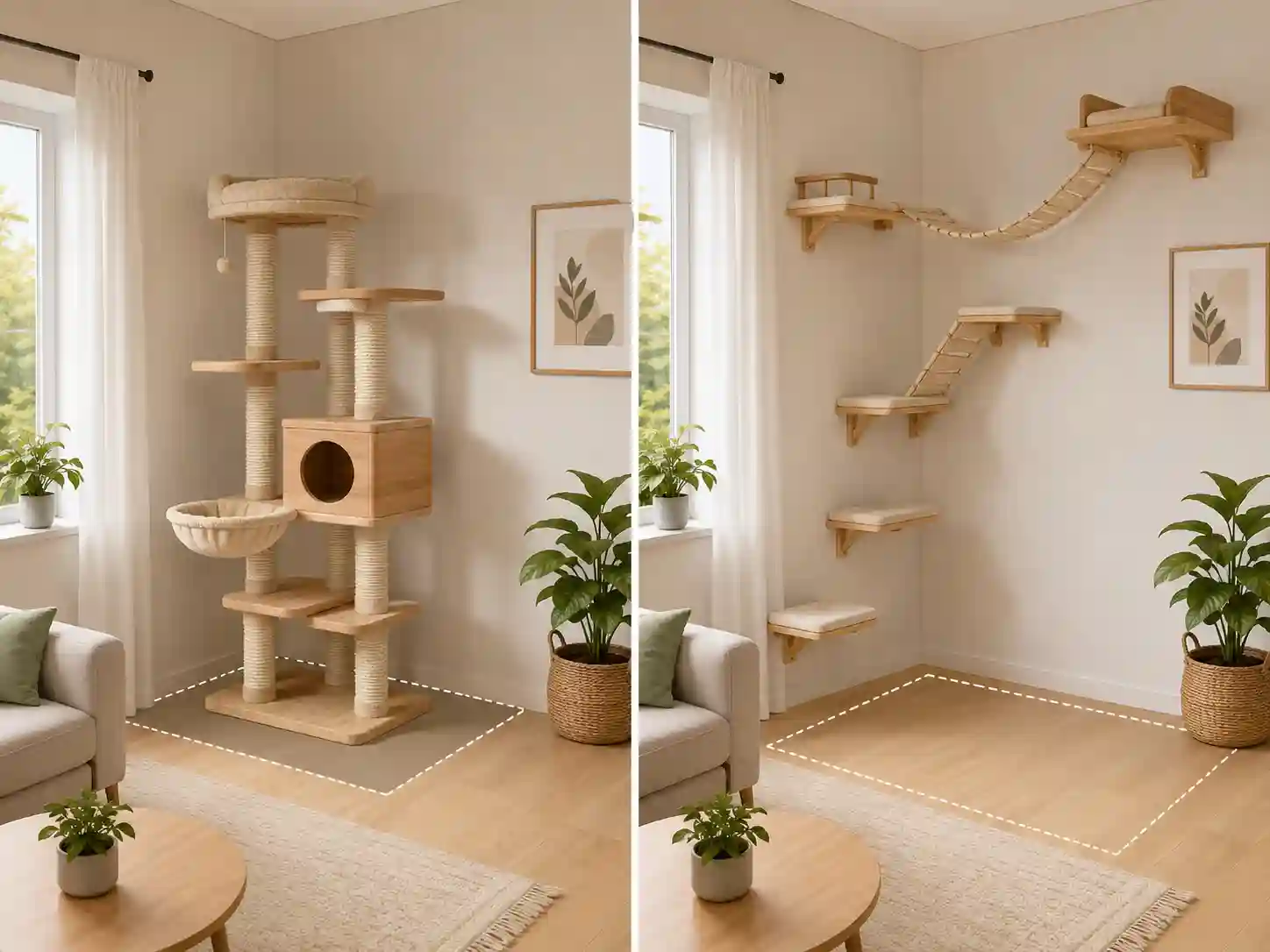
The key difference is structure. A Cat Tree rises from the floor as one unit. Cat shelves are mounted pieces that create a route across a wall.
Cat Tree: A Freestanding Vertical Setup
A Cat Tree can include platforms, enclosed resting areas, scratching material, or a mix of these features. Check access to each level and resting area.
A freestanding unit can move when you rearrange the room or move home. The Bastet Cat Tree collection currently lists 13 product entries.
Cat Shelves: A Wall-Based Climbing Route
Cat shelves use a wall to create travel points above floor level. They can suit a compact room with a long, usable wall.
Review wall type, mounting method, access between shelves, and tenancy rules before selecting the route. A shelf layout stays tied to that room plan after installation.
Cat Tree vs Cat Shelves at a Glance
| Decision factor | Cat Tree | Cat Shelves |
|---|---|---|
| Main location | Freestanding on the floor | Mounted along a wall |
| Typical role | Climbing, resting, and scratching features in one unit | A climbing and perching route across mounted pieces |
| Placement | Can move with room furniture | Follows the installed wall layout |
| Space planning | Requires a floor footprint and vertical clearance | Uses wall area and requires a usable mounting surface |
| Home fit | Homes that need an integrated vertical unit | Homes with a stable wall route plan |
When Is a Cat Tree the Better Choice?
A Cat Tree is a practical format when one structure suits the household routine.
You Want Climbing, Scratching, and Resting in One Structure
Select features that match the activities you want to provide. Platforms give cats raised rest options. A rope-covered part provides a scratching surface when the model includes one. The AAFP and ISFM guideline identifies scratching as normal marking behaviour and recommends perches wide and long enough for a cat to stretch fully.
Compare the platform shape, resting surface, access points, and scratching material for the exact model.
You Need Furniture That Can Move With the Home
A freestanding Cat Tree can be repositioned as the room changes. This can suit a rental home. Keep the base clear of doors, furniture, and household traffic.
You Prefer a Floor-Based Setup
Cat shelves require a secure mounting plan. A Cat Tree requires a floor location, model dimensions, and access to each level.
The guideline recommends lower perches or ramp access for kittens and older cats with limited mobility.
You Are Discussing a Configurable Supplier Design
Bastet’s 140 x 60 x 40 cm Cat Tree example lists rubber wood, sword hemp rope, hand-woven rattan, and acrylic. The listing also states OEM/ODM availability according to requirements.
Use these details for a discussion about footprint, material preference, or a reference design. Load capacity, certification, assembly details, and warranty terms need direct confirmation.
When Are Cat Shelves the Better Choice?
Cat shelves fit a home with useful wall area. The route needs a stable location and a layout the cat can use comfortably.
Floor Space Is Limited and a Suitable Wall Is Available
Shelves keep more of the floor open for other household items. Plan a reachable starting point, landing areas, and room for the cat to turn or rest.
You Want a Longer Climbing Route
A series of shelves can connect several perches across a room. Build each point around access, pause, rest, or travel.
Permanent Placement Fits the Household
Shelves suit a room with a settled layout and permission for mounting work. Review tenancy terms before drilling in a rental home.
How Should Your Cat’s Age, Mobility, and Household Change the Choice?
Your cat’s current movement and the household’s resource plan shape the decision. The AAFP and ISFM guideline calls for separate locations for key resources in multi-cat homes.
Active Climbers and Confident Cats
An active climber may use a multi-level Cat Tree or a shelf route. Observe how it reaches higher areas.
Kittens and Cats With Limited Mobility
The guideline recommends lower perches, shelves, or ramp access for kittens and older cats with limited mobility.
Multi-Cat Homes
One raised item may form part of the plan. The guideline recommends multiple, separated locations for key resources and at least as many safe places as cats in the home.
What Should You Check Before Buying a Cat Tree or Cat Shelves?
Use product-level checks. Broad format labels do not answer every household question.
Placement, Access, and Cleaning
Measure the intended location before ordering. Include furniture, litter areas, food and water locations, and the cat’s approach route.
Stability and Installation Details
For a Cat Tree, review the supplier’s assembly and placement information for the exact model. For shelves, confirm wall type, mounting method, hardware, and route with a qualified installer when needed. A material list does not establish capacity.
Materials, Dimensions, and Supplier Questions
Ask for dimensions, materials, configuration, packing, assembly information, and available safety documentation. Bastet’s Cat Tree material combination lists natural solid wood, rubber wood, sisal rope, acrylic, paper tube, cotton mattress, and flannelette. The listing states OEM/ODM availability.
Which Cat Tree Option Fits Your Home?
A Cat Tree fits homes that need a movable vertical structure with climbing, resting, and scratching features in one footprint. Cat shelves fit homes with suitable wall space, a fixed installation plan, and a cat that can use the route. Accessible levels and separate resources remain useful selection checks for either format.
Bastet (Tianjin) Pet Products Co., Ltd. lists Cat Tree models with different material combinations. Cat Tree 8 lists a 140 x 60 x 40 cm format with rubber wood, sword hemp rope, hand-woven rattan, and acrylic. Several listed Cat Tree models state OEM/ODM availability. Buyers can send a Cat Tree requirement with dimensions, material preferences, a drawing, a reference image, or an idea. Bastet states that it provides a specific quote within 24 hours after receiving requirements; this timing concerns quotation.
FAQ
Q1: Are Cat Trees suitable for indoor cats?
A: A Cat Tree can provide climbing, resting, and scratching areas in one freestanding structure when the model includes those features. Review its dimensions and access between levels.
Q2: Can a Cat Tree fit a small apartment?
A: A Cat Tree can fit when the room has enough floor area for the model’s footprint. Measure the intended position and product dimensions before ordering.
Q3: Are cat shelves suitable for kittens or older cats?
A: They can be suitable when the route has lower, reachable levels or ramp access. The AAFP and ISFM guideline recommends lower heights or ramps for kittens and older cats with limited mobility. Select the route around the cat’s current movement.
Q4: How should a multi-cat home plan Cat Trees and perches?
A: Plan several separated locations for key resources. The AAFP and ISFM guideline calls for at least as many safe places as cats in the household. Review each access route for every cat.
Q5: What should you ask a Cat Tree supplier before ordering?
A: Ask for dimensions, materials, configuration, packing, assembly information, and available safety documentation. For a customised request, provide the location, target dimensions, material preference, drawing, or reference image. These inputs support a configuration discussion and quote.