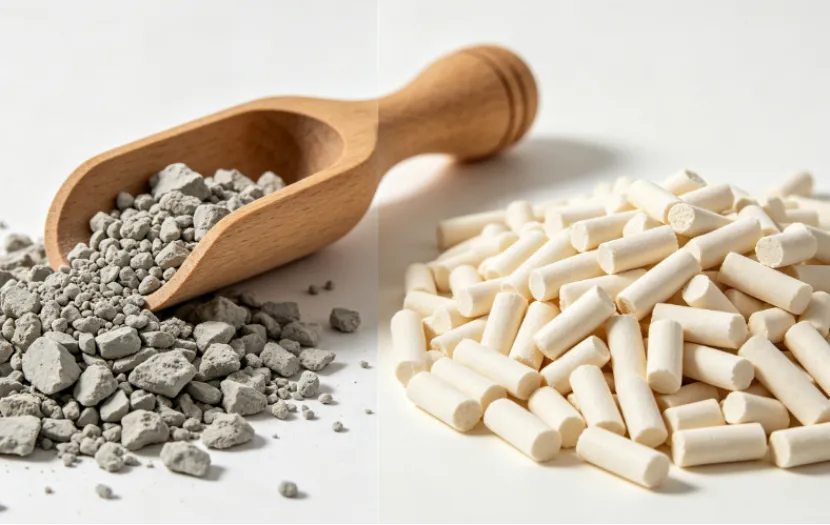
Cuando comparas Arena para gatos de bentonita vs. tofuLa pregunta clave es sencilla: ¿prefieres el mejor rendimiento diario, el menor coste o una mayor sostenibilidad? La mayoría de los compradores buscan las tres cosas. Ahí es donde la decisión se complica. Un tipo suele imponerse por su robustez y precio. El otro, en cambio, suele ser más ligero, más limpio y más práctico para un hogar pequeño.
Si consulta las páginas de los proveedores en lugar de leer comentarios al azar, Bastet Pet se presenta como un fabricante que ofrece información específica, lo cual resulta útil. Su sitio web muestra arena para gatos de bentonita, tofu, mineral, yuca y cristal, además de soporte OEM y ODM, fragancias personalizadas, empaques personalizados y opciones de marca blanca. Las páginas de productos son inusualmente directas: la bentonita se describe como 100 % natural, 99 % libre de polvo, de rápida aglomeración en 3 segundos, con baja dispersión y no apta para el inodoro; el tofu se describe como de origen vegetal, con bajo contenido de polvo, de rápida aglomeración, con baja dispersión, biodegradable y disponible en opciones aptas para el inodoro. Este nivel de detalle es importante al elegir una fórmula para uso diario, no solo al leer un eslogan publicitario.
¿Qué es lo más importante a la hora de elegir entre arena para gatos de bentonita y de tofu?
Antes de decidirte por una opción, conviene analizar las características de cada material. La bentonita se caracteriza por su rápida absorción y la formación de grumos firmes. El tofu, por su composición en gránulos de origen vegetal, su fácil manejo y su imagen más ecológica. Ninguno es perfecto, lo que probablemente explica por qué este tema surge con tanta frecuencia.
¿Qué hace que la arena para gatos de bentonita sea tan popular?
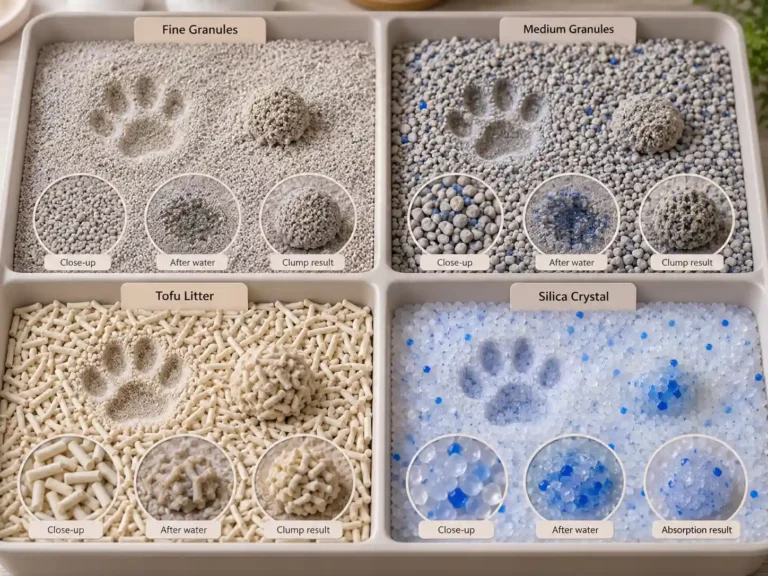
En la página de arena para gatos de bentonita, la promesa principal es clara: aglomeración rápida y compacta, poca dispersión, fuerte control de olores y una fórmula sin polvo. El tamaño del gránulo se indica de 0,5 a 4 mm, y las preguntas frecuentes señalan que los gránulos más grandes pueden ayudar a reducir la dispersión. Para usted, eso significa menos desmoronamiento al recoger la arena y menos arena fuera de la caja. En pocas palabras, la bentonita sigue siendo la opción más segura cuando se busca una arena confiable. arena aglomerante para gatos.
¿Qué hace que la arena para gatos de tofu sea diferente?
La página de la arena para gatos de tofu la describe como una arena biodegradable de origen vegetal, elaborada con fibra de soja o guisante y aglutinantes de almidón. También se indica que es 99 % libre de polvo, no deja rastro, se aglomera rápidamente y es suave para las patas. El tamaño de los gránulos varía de 1,0 mm a 3,0 mm, por lo que su textura es muy diferente a la de la arcilla. Algunos gatos se acostumbran enseguida, otros no. La verdad es que los gatos pueden ser un poco tercos con la textura.
¿Cuál funciona mejor como arena aglomerante para gatos?
Esto suele ser lo primero que les importa a los compradores, sobre todo si la caja de arena se usa mucho a diario. Una buena aglomeración ahorra tiempo, reduce el desperdicio y evita que la caja se convierta en un desastre húmedo al tercer día.
¿Por qué la bentonita suele aglomerarse más rápido?
En el debate entre la arena para gatos de bentonita y la de tofu, la bentonita suele ganar cuando la prioridad principal es conseguir grumos compactos. Bastet Mascota En la descripción del producto se indica que la bentonita se aglomera en 3 segundos, y en sus preguntas frecuentes también se señala que la bentonita sódica tiende a aglomerarse más y a absorberse más rápido que la bentonita cálcica. Si está eligiendo arena para gatos para hogares con varios gatos, esto es muy importante. Los grumos compactos se mantienen mejor si se recogen rápidamente antes de ir al trabajo.
Cuando el tofu todavía tiene sentido
El tofu también se vende como arena de aglomeración rápida, y Bastet Pet indica una absorción del 400 % o más. Por lo tanto, no se trata de un producto débil. Sin embargo, en una comparación directa entre arena de tofu y arena de arcilla, el tofu suele resultar más atractivo por su comodidad y limpieza que por la dureza de los grumos. Si tienes un solo gato y recoges los excrementos con regularidad, el tofu puede seguir siendo una opción práctica y limpia.
¿Qué opción es mejor para controlar el olor, el polvo y las manchas?
Aquí es donde muchos compradores dudan. De poco sirve que el producto se aglutine bien si la habitación sigue oliendo mal o si el suelo alrededor de la caja parece una playa al mediodía.
¿Cuál es la mejor arena para gatos para controlar el olor?
Si buscas la mejor arena para gatos para controlar el olor, la bentonita suele ser la mejor opción. Bastet Pet destaca las partículas desodorantes de la bentonita y describe el tofu como un excelente control de olores, pero la página de la bentonita hace mayor hincapié en su rápida absorción y la formación de grumos compactos. Esta combinación es importante porque los problemas de olor suelen comenzar cuando la humedad permanece demasiado tiempo.
¿Cuál se ajusta mejor a una necesidad de arena para gatos con bajo contenido de polvo o arena para gatos que no deje rastro?
Si su enfoque es una arena para gatos con bajo contenido de polvo o una camada de gato de bajo seguimientoEl tofu tiene un aspecto muy atractivo. Bastet Pet indica que tanto la bentonita como el tofu son 99 % libres de polvo, pero el tofu también ofrece una textura suave y menor dispersión de partículas como ventajas principales. La bentonita puede funcionar bien en este aspecto, especialmente con gránulos más grandes, pero el tofu suele ser más fácil de manejar en apartamentos, cerca de muebles o en cualquier lugar donde se note el polvo de inmediato.
¿Cómo se comparan el costo y la sostenibilidad?
Este aspecto suele ser decisivo para la compra. A mucha gente le gusta la idea de usar arena para gatos de origen vegetal, pero luego ven el precio y lo piensan dos veces. Es comprensible.
Por qué la bentonita suele ganar en precio.
En la mayoría de las comparaciones entre arena para gatos de tofu y de arcilla, la bentonita suele ser la opción más económica. Las preguntas frecuentes de Bastet Pet también ofrecen una pista práctica sobre el empaque: 5 litros es común para hogares con un solo gato, 10 litros es el estándar y los tamaños de 20 a 25 litros son los preferidos para hogares con varios gatos. Si buscas una buena relación calidad-precio y un rendimiento óptimo a diario, la bentonita suele ser más económica. Por eso, la gente sigue preguntando si vale la pena usar arena para gatos de tofu.
¿Por qué el tofu atrae a los compradores con conciencia ecológica?
El tofu tiene una historia de sostenibilidad más limpia. Bastet Pet lo describe como de origen vegetal y biodegradable, mientras que en sus preguntas frecuentes sobre la bentonita, la respuesta a si la arena para gatos de bentonita se puede tirar por el inodoro es no, porque la bentonita se expande en el agua y puede obstruir las tuberías. El tofu, en cambio, se vende con opciones que sí se pueden tirar por el inodoro. Así que, si te preocupa más la eliminación de residuos y los ingredientes renovables, el tofu puede valer la pena el costo adicional incluso antes de abrir la bolsa.
¿Cuál deberías elegir?
Al final de la elección entre arena para gatos de bentonita y tofu, tu rutina diaria importa más que las discusiones en línea. Si quieres la mejor arena para gatos para controlar el olor, facilitar la limpieza y que sea confiable para hogares con varios gatos, la bentonita suele ser la respuesta práctica. Si quieres una camada de gato biodegradable El tofu es más ligero, suave y, a menudo, más fácil de ensuciar, por lo que es una opción muy sensata. No hay una solución mágica. Simplemente se adapta mejor a tu estilo de vida.
Preguntas frecuentes
P1: ¿Qué arena para gatos, la bentonita o la de tofu, es mejor para controlar el olor?
A: La bentonita suele ser mejor para el control de olores porque sus grumos compactos y partículas desodorantes ayudan a atrapar la humedad y a eliminar los malos olores más rápidamente.
P2: ¿Merece la pena usar arena para gatos de tofu?
R: Si buscas una arena para gatos más ligera, de origen vegetal, con poco polvo y que se pueda desechar por el inodoro, sí, el tofu puede valer la pena a pesar de su precio más elevado.
P3: ¿Se puede desechar por el inodoro la arena para gatos de bentonita?
R: No. Bastet Pet afirma que la bentonita se expande en el agua y puede obstruir las tuberías, por lo que debe desecharse en la basura.
P4: ¿Cuál es la mejor arena para gatos con bajo contenido de polvo?
A: Ambos productos figuran como 99 % libres de polvo en Bastet Pet, pero el tofu también aporta un formato de pellets suaves que no dejan residuos y que muchos compradores consideran más limpio para el uso diario.
P5: ¿Qué tipo de arena para gatos funciona mejor en hogares con varios gatos?
A: La bentonita suele ser la opción más resistente para hogares con varios gatos, ya que los grumos firmes y de rápida formación son más fáciles de recoger y manejar durante el día.