Cat litter granule size matters because it changes the texture under a cat’s paws and the way a household handles the box. Size works together with the litter material, moisture response, dust level, and clumping method. Read the particle specification as one part of the selection decision, then check the product instructions and your cat’s response during a gradual change.
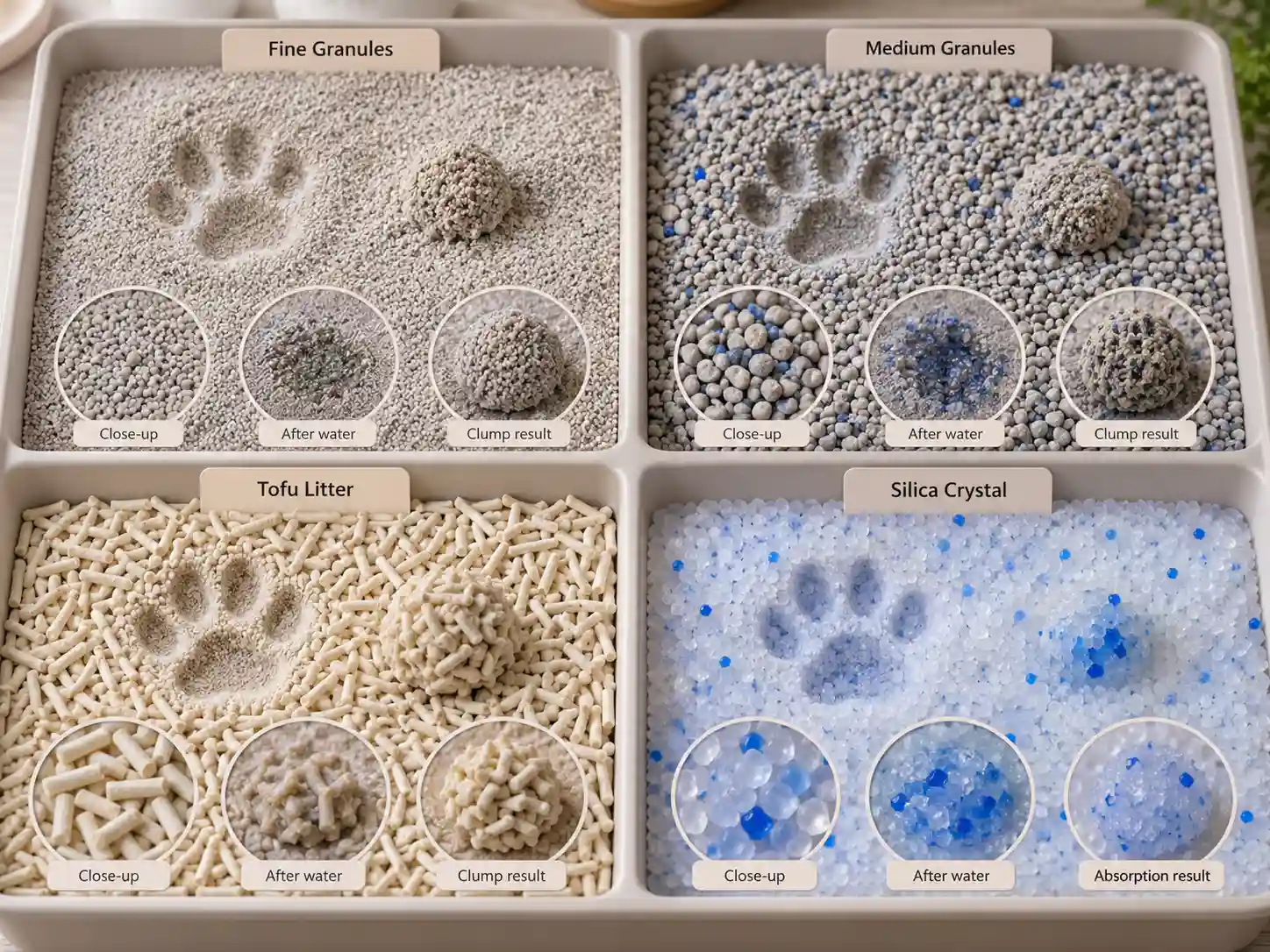
Does Cat Litter Granule Size Matter?
Yes. Granule size describes the length, diameter, or mesh range of the pieces in a product. Those measurements tell you what the litter may feel like and give a supplier a clear production target.
Size does not prove a universal result. A tofu pellet, a bentonite grain, and a silica-gel crystal can share a measurement while behaving differently because their materials and shapes differ. Use size as a starting filter; it is not a stand-alone performance score.
What “Granule Size” Means on a Specification
Suppliers may list a diameter, a length, a mesh range, or a requested size. Ask whether the number describes the finished product or a target range.
Why One Size Does Not Fit Every Cat
Cats show individual preferences for texture, scent, and box conditions. Kittens may need a careful transition, while a multi-cat home needs a routine that makes scooping and tracking easy to monitor.
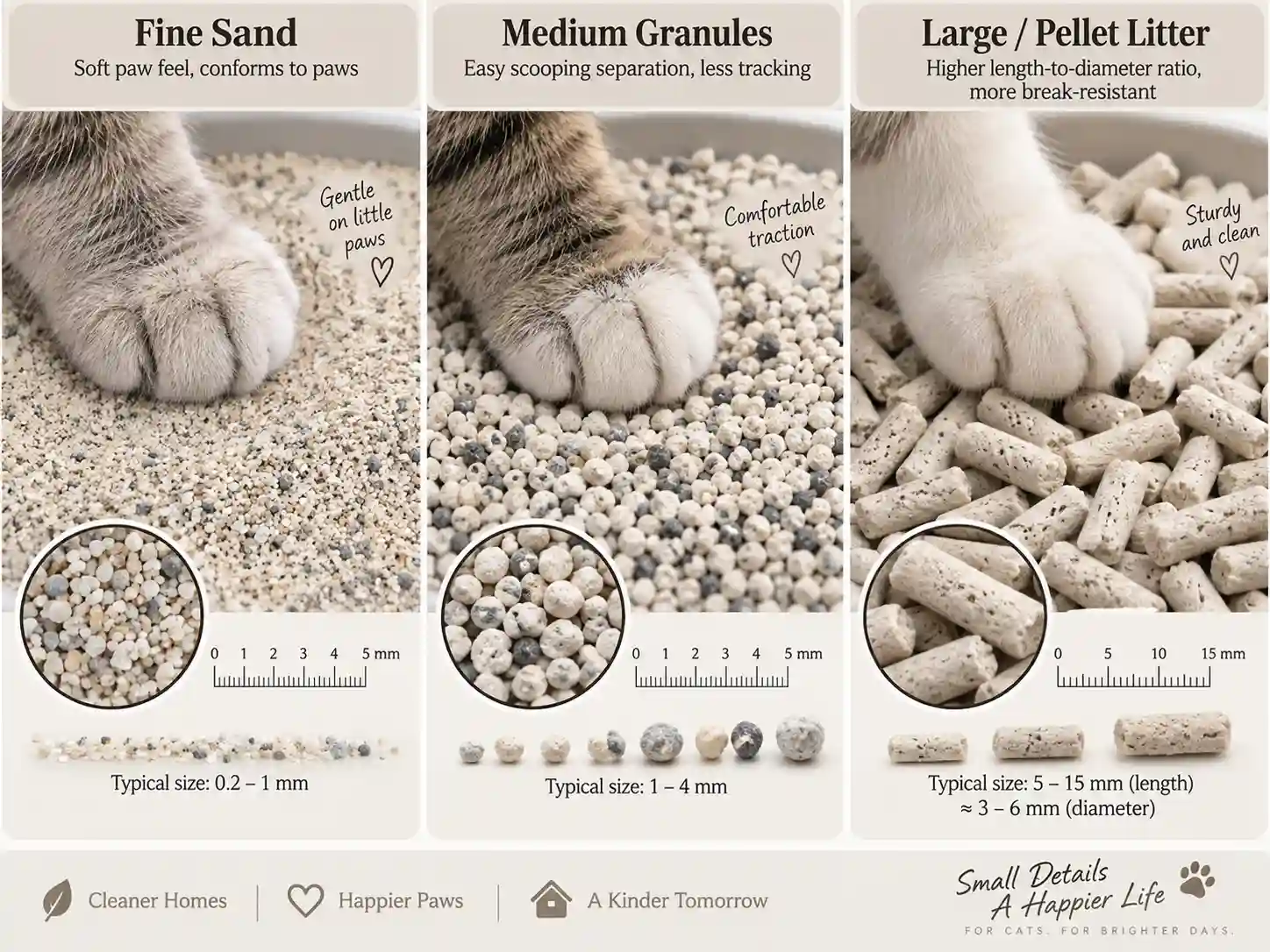
How Do Different Cat Litter Textures Affect Daily Use?
No size band guarantees one performance result. Connect the stated dimensions to a short household check.
| Specification detail | What to check at home | Supplier question |
| Fine or small grains | Paw feel, visible dust, and spread around the box | How is dust measured for this formula? |
| Medium grains or short pellets | Clump shape, scoop separation, and tracking | What clumping method and moisture basis are used? |
| Larger pellets or mixed ranges | Cat acceptance, pellet breakage, and box coverage | What is the length-to-diameter range in the finished batch? |
| Any stated range | Consistency from one refill to the next | Is the range a target, a tolerance, or a requested option? |
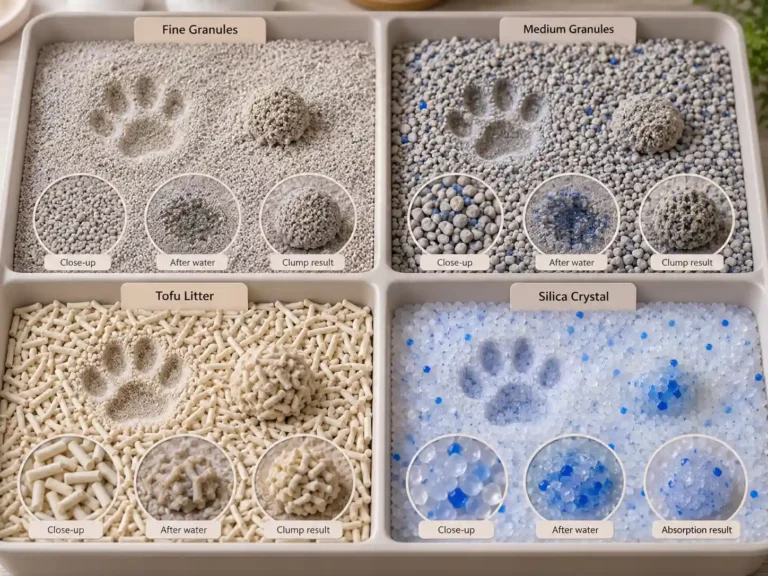
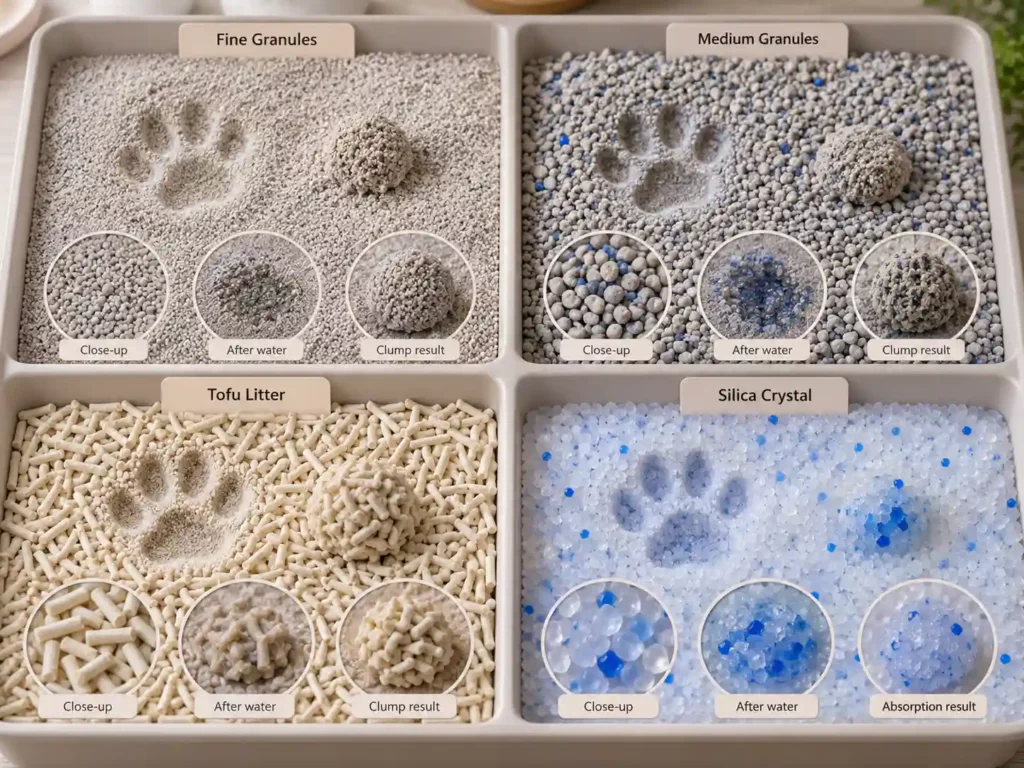
Fine Granules and Paw Feel
Small pieces create a close-textured surface. Check the label for material and dust information, then watch the mat, rim, and nearby floor after normal use.
Medium Granules, Clumps, and Tracking
Medium grains or short pellets can be easier to separate when a clump holds together. Formula, moisture contact, and scoop timing still control the result. Check clump separation and tracking around the box.
Larger Pellets and Transition Checks
Larger pieces create a different paw sensation and may require a slower transition. Follow the product instructions and watch box use, texture acceptance, and loose pieces around the box.
What Should You Check Besides Particle Size?
Granule dimensions answer one question. Material and test conditions provide the remaining context.
Material and Absorption
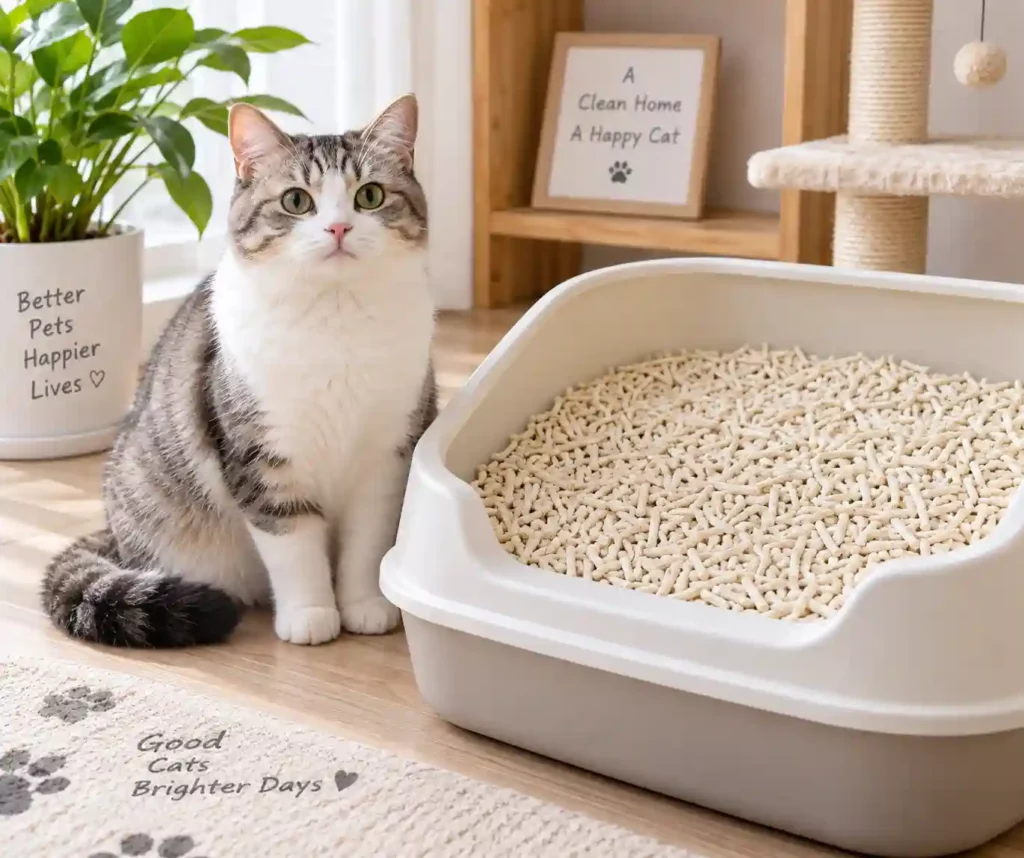
Clay, bentonite, crystal, tofu, and cassava litters use different materials. A supplier should identify the main material and absorption basis. Bastet’s inspected tofu specification lists pea fiber and corn starch as main material and absorption of `≥400%`.
Dust Rate and Odor Documentation
Dust and odor claims need a product scope. Bastet’s inspected tofu information lists `<5%` dust rate and a 99% dust-free claim. Its inspected crystal information lists silica gel, high adsorption, odor control, and a dust-free claim. Apply each statement only to its specified product.
Clumping Method and Scoop Routine
“Clumping” describes how wet litter forms a removable mass. Ask for the clump description, scoop timing, and suitable scoop opening. Record whether clean litter stays in the box.
What Granule Sizes Does Bastet List?
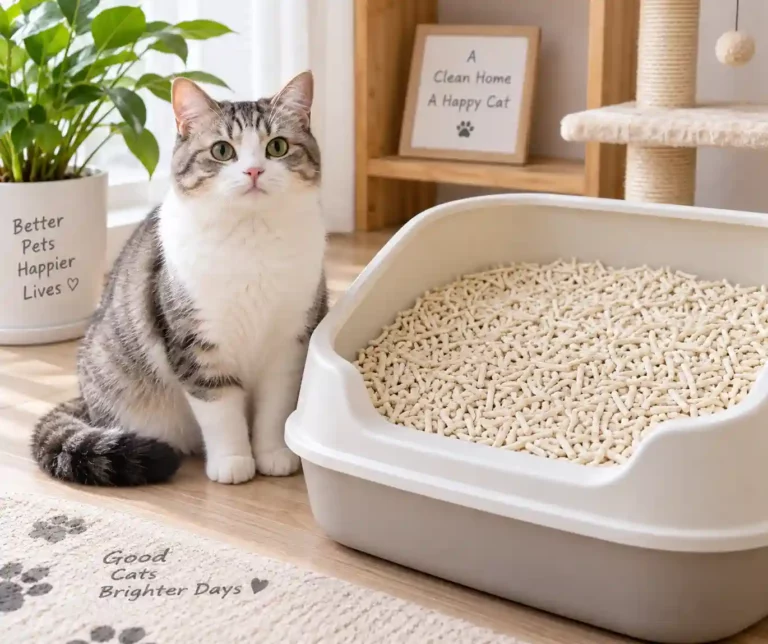
Bastet lists tofu, mineral, bentonite, crystal, and cassava cat litter categories. Its inspected tofu information lists 10–30 mm length, 1.0, 1.5, 2.0, or 3.0 mm diameters, soybean, corn starch, and guar gum, soft texture, tight clumps, odor control, and 6L or 7L inner packing. Listed flavors are coffee bean, green tea, honey peach, and active carbon.
The inspected crystal information lists a 1–8 mm granule range or requested size, silica gel, and blue, gray, and pink options. These dimensions apply to the inspected information. See the Bastet cat litter categories when matching a material to a sourcing request.
How Should You Choose Cat Litter Texture for Kittens and Multi-Cat Homes?
Match texture checks to the cat’s age, number of boxes, and cleaning routine.
Kitten Transition and Paw Comfort
Use a gradual change and keep the box location stable during the trial. A kitten’s response gives you a practical acceptance signal, but it does not replace the product’s safety instructions. Pause the trial and seek veterinary advice for pain, blood, or persistent elimination changes.
Shared Boxes and Cleaning Records
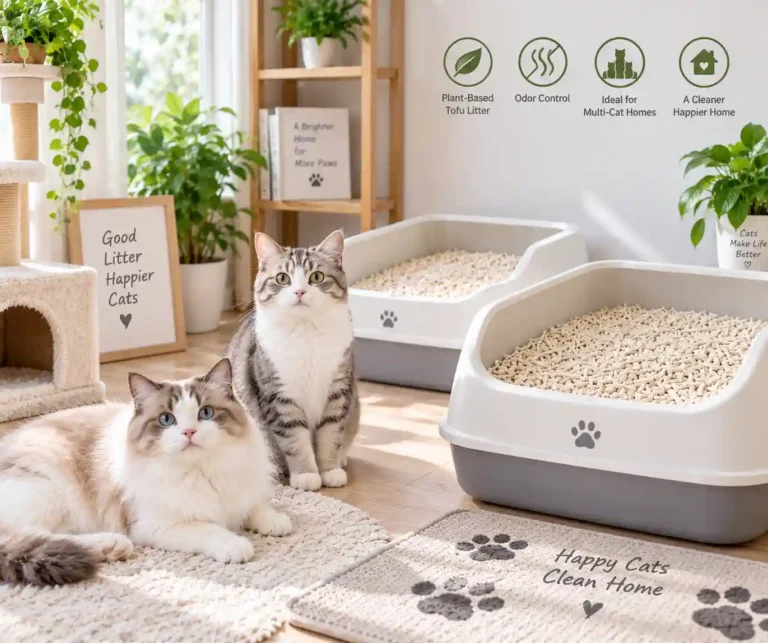
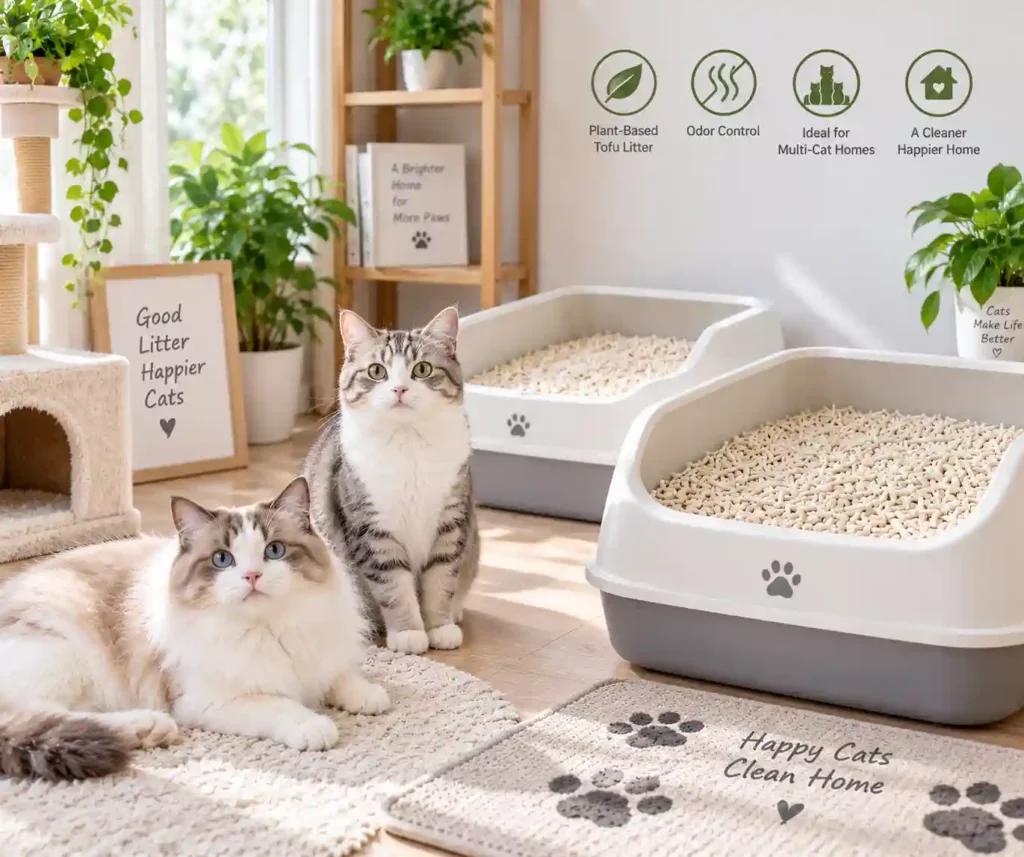
The Atlanta Humane Society guidance dated November 8, 2024 recommends at least one litter box per cat plus one additional box. Record material, granule range, dust, clump handling, and tracking for each box. For plant-based options, see the Bastet tofu cat litter category.
How Do You Test a New Cat Litter During a Routine Change?
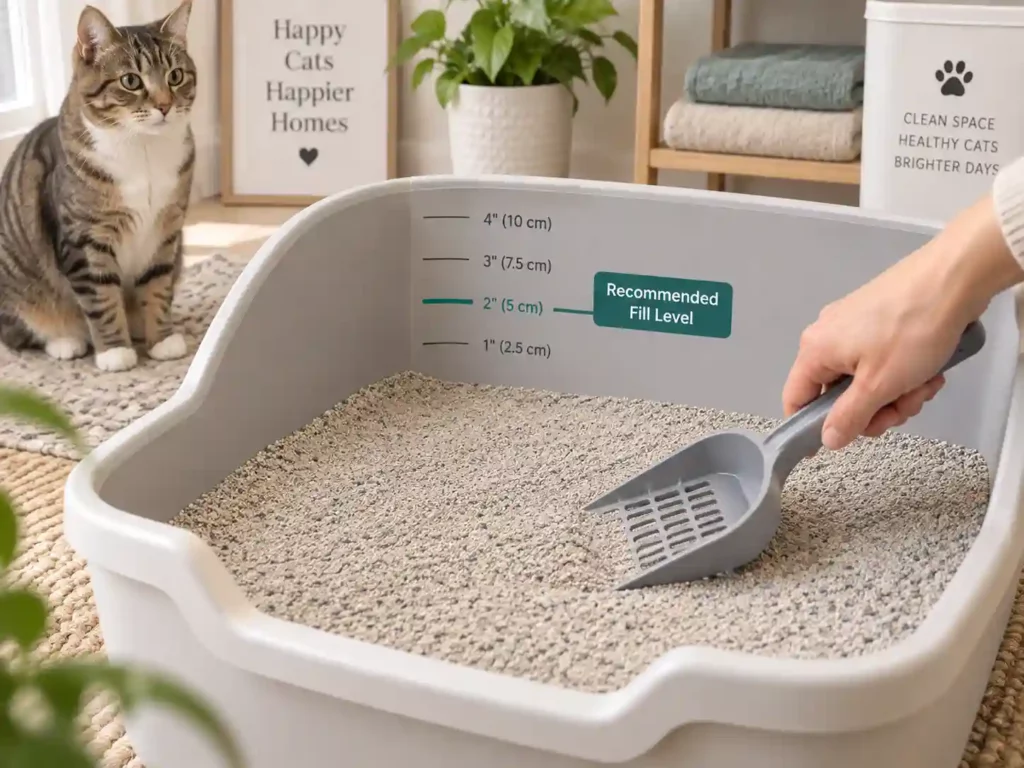
Keep the first trial small enough to observe. Follow transition instructions, use a familiar box, and record the cat’s use. Check the mat and scoop after normal cleaning; a single visit cannot establish the result.
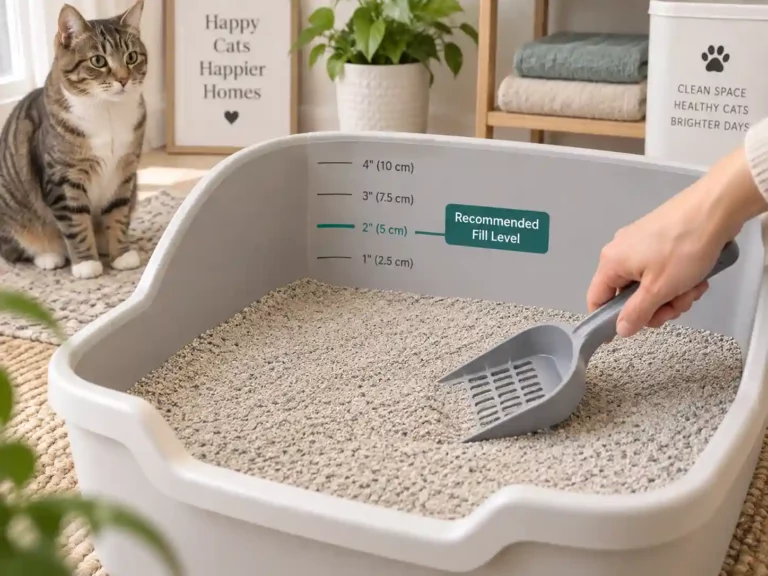
Track visible dust, pieces carried from the box, clump separation, and continued use. Review material, size range, fill depth, and scoop opening together. Use the Bastet litter-changing guidance for the transition checklist.
What Should You Ask a Cat Litter Supplier About Granules?
Request finished length, diameter or mesh range, batch tolerance, main material, ingredients, dust method, absorption basis, clumping description, scent options, and pack sizes. Private-label buyers should confirm artwork inputs, safety documents, destination-market requirements, and quantity.
Ask suppliers to state the same measurement basis before reviewing samples or quotations. For crystal products, the Bastet crystal cat litter category lists material and size options for the inquiry.
Which Cat Litter Specification Fits Your Home?
Choose a cat litter specification by matching the material and stated granule range to the cat’s texture preference and the household cleaning routine. Then confirm dust, clumping, absorption, scent, packing, and disposal instructions for the exact product.
BASTET (Tianjin) Pet Products Co., Ltd. lists five cat-litter categories and publishes product-level tofu and crystal size options. A useful inquiry should include the number of cats, box type, preferred texture, material, diameter or length range, scent, packing, quantity, and destination market. Those inputs give the supplier a defined basis for confirming a suitable product configuration.
FAQ
Q1: What cat litter granule size is best for kittens?
A: There is no single size supported for every kitten. Choose a product with a clearly stated material and size, introduce it gradually, and monitor box use and paw comfort. Follow the exact product instructions and seek veterinary advice for pain, blood, or persistent elimination changes.
Q2: Does granule size determine cat litter dust?
A: No. Dust depends on the complete formula and the supplier’s measurement method as well as particle size. Bastet’s inspected tofu information lists `<5%` dust rate and a 99% dust-free claim for that product information, while its inspected crystal information lists a dust-free claim; these statements do not establish a rule for every cat litter.
Q3: Can granule size change clumping performance?
A: Size can affect how you handle a clump, but size alone does not establish clump strength. Ask for the product’s clumping description and moisture test basis, then check scoop separation during a controlled household trial. Record whether clean litter stays in the box.
Q4: How should you compare tofu and crystal cat litter granules?
A: Compare the material, stated size range, absorption or adsorption description, dust information, scent, and pack size together. Bastet’s inspected tofu information lists 10–30 mm length and 1.0, 1.5, 2.0, or 3.0 mm diameters; its inspected crystal information lists a 1–8 mm range or requested size. Those values belong to the specified product information and do not make the two materials interchangeable.
Q5: What granule information should a supplier provide?
A: Request the finished length, diameter or mesh range, tolerance, main material, dust method, absorption test basis, clumping description, scent, and pack size. Ask the supplier to state whether each number is a target, a tolerance, or a measured range. This keeps samples, quotations, and production checks on the same basis.