The right amount of cat litter starts with the exact product instructions and the size of the box. A repeatable fill level gives your cat a stable surface and gives you a consistent scooping routine. Material, clumping behavior, box shape, and the cat’s response all matter, so a single amount cannot fit every home.
What Is the Right Amount of Cat Litter?
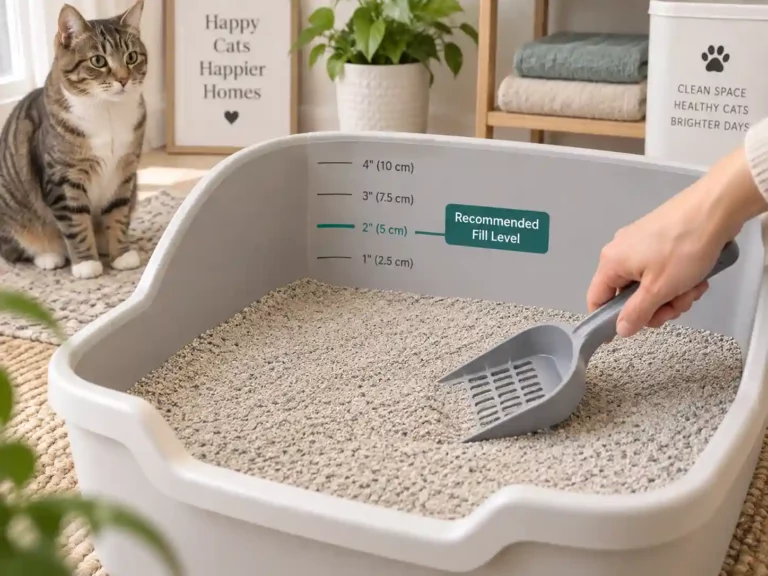
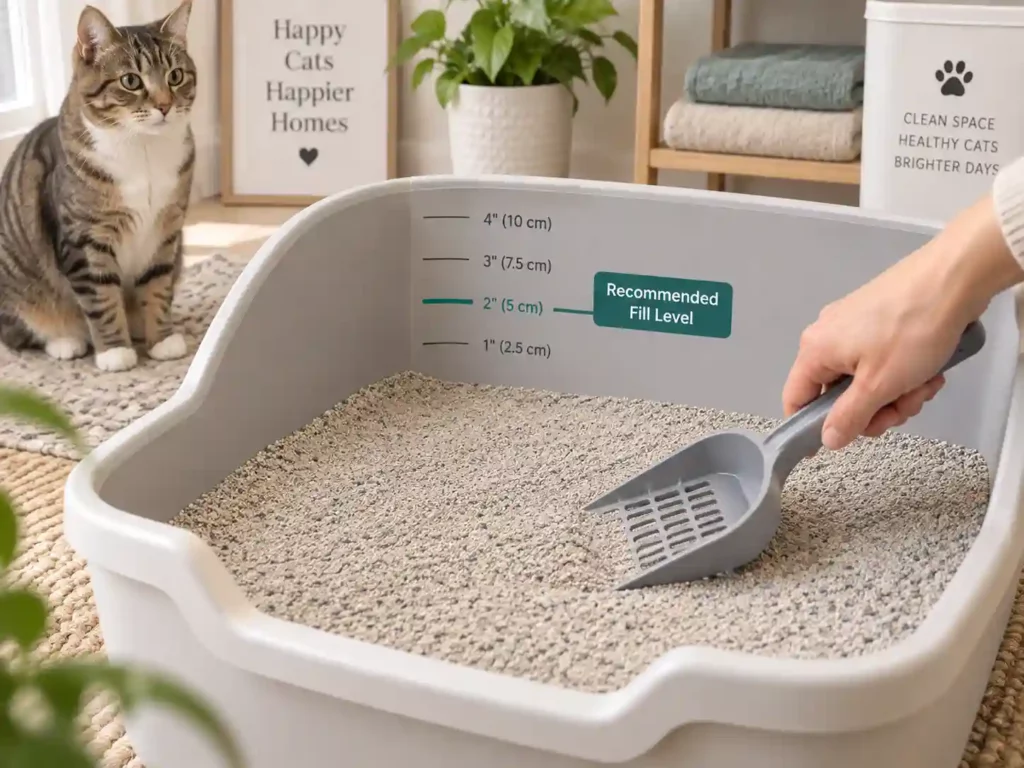
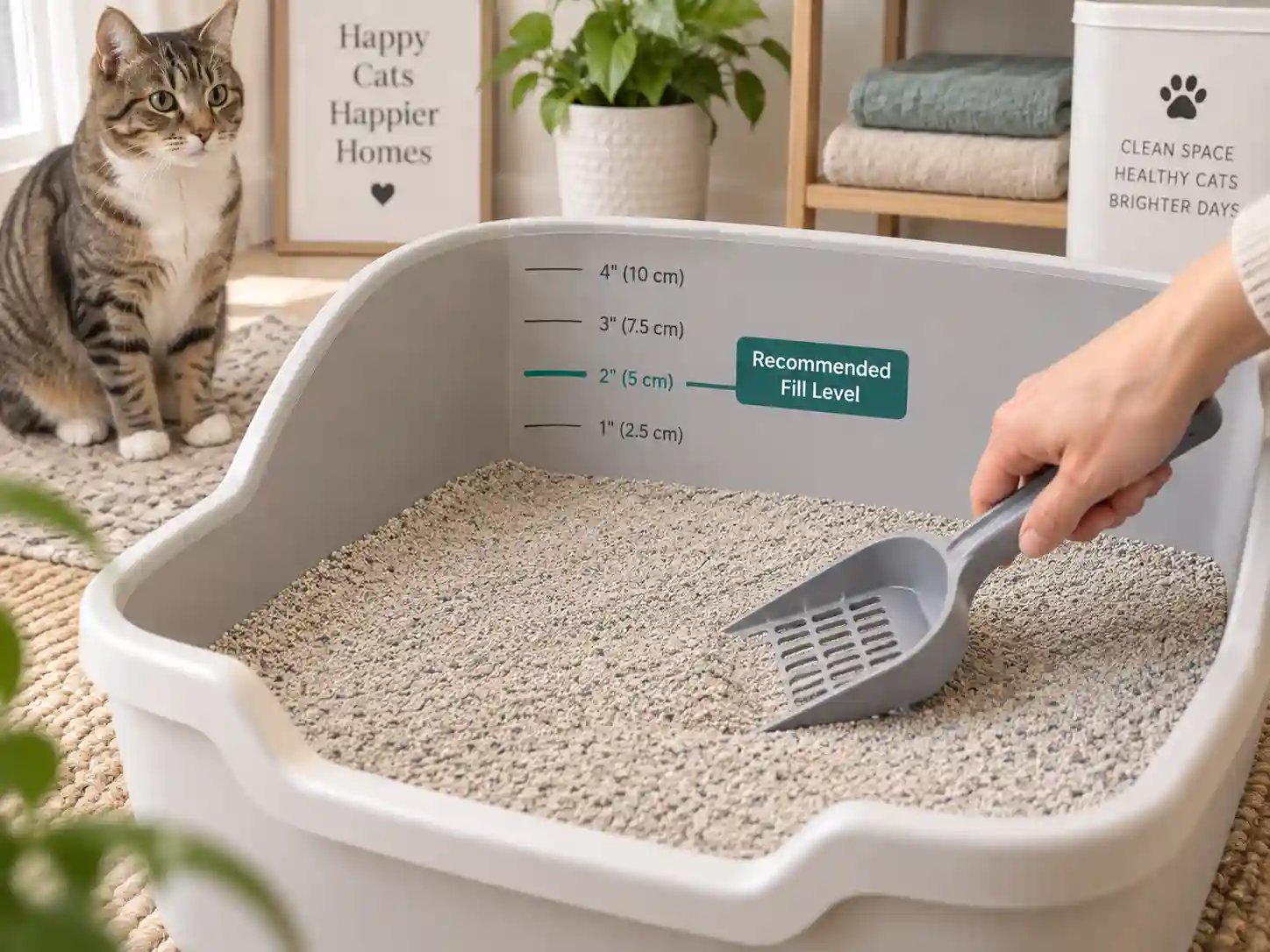
Use the product instructions as the starting point. Then choose a fill level that covers the box base, supports normal use, and leaves enough material for clean scooping. Record that level so the next refill follows the same routine.
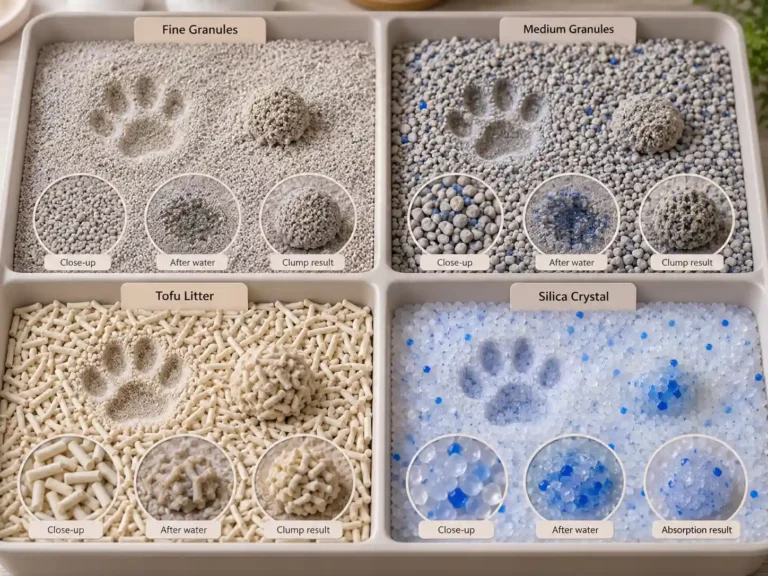
There is no evidence-based universal depth for every clay, bentonite, crystal, tofu, or cassava formula. Granules differ in size and moisture response. A box with a low front entry also holds a different working volume from a deep-sided box.
Measure the Box Before Filling
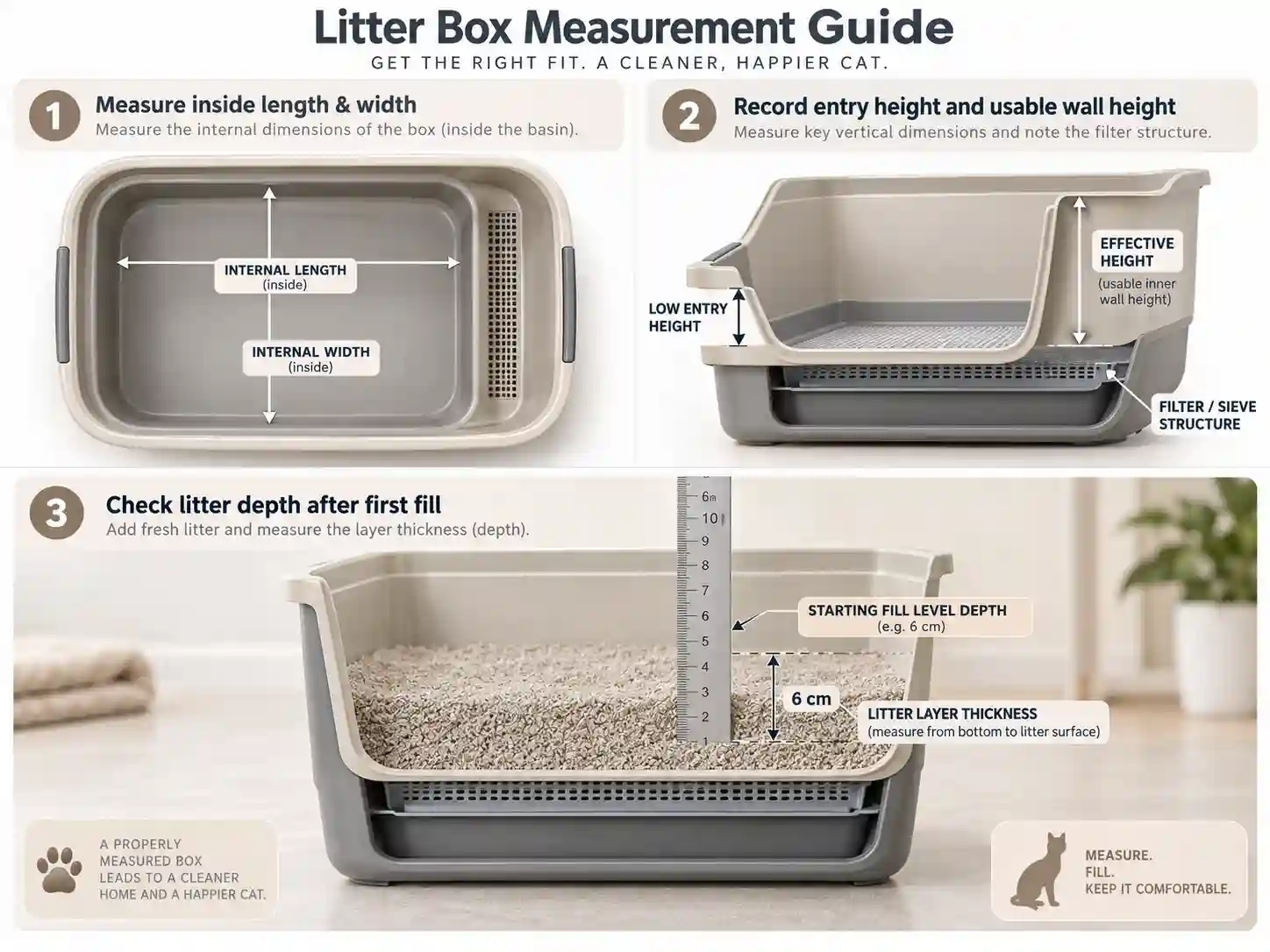
Record the inside length, width, and usable height. Note the low-entry side, raised edges, liner, and any sifting tray. These details define the space that the litter actually fills.
Do not compare a bag size with a fill depth. Litres describe the package volume; a depth describes the layer inside the box. Keep both records when reviewing a product or a supplier quotation.
Record the Starting Fill Level
Level the litter before the cat uses the box. A simple mark on the outside of the box or a note in the cleaning record makes the starting point repeatable. The goal is a stable routine that can be checked after scooping.
How Do You Set Up a New Cat Litter Box?
Fill the box according to the product instructions, smooth the surface, and observe the first cleaning cycle. Record how much material remains after normal use; the bag label alone cannot set the household level.
| Setup task | Household observation | Supplier confirmation |
| Measure the usable box area | Note the low side, tray, and liner | Which box dimensions support the recommendation? |
| Add the starting amount | Record the level before first use | Is the amount based on litres, weight, or depth? |
| Scoop after normal use | Check clump removal and clean-litter loss | What scoop timing and clump method are specified? |
| Top up or replace | Record the new level and material used | What refill and full-change instructions apply? |
Fill, Level, and Observe
Follow the product’s stated fill guidance. Keep the surface level and the box in its familiar location during the first trial. Observe whether the cat enters, turns, covers waste, and returns to the box.
Check Clumps and Clean-Litter Loss
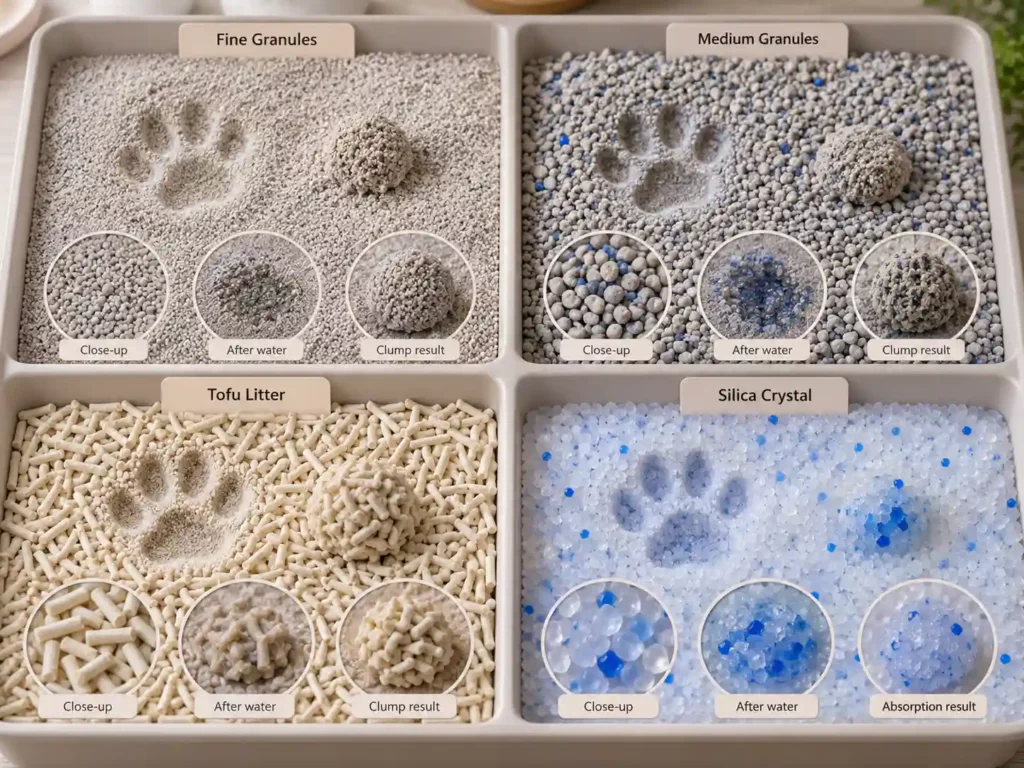
“Clumping” means wet litter forms a removable mass. After scooping, check whether the mass separates from clean litter and whether the box base remains covered. If the clump breaks apart, record the material, fill level, moisture contact, and scoop timing for the supplier.
How Much Cat Litter Should You Add After Scooping?
Top up when the remaining layer falls below the recorded starting level or the product instructions call for more litter. Add enough to restore that reference level, then smooth the surface. A fixed scoop count can mislead because clump size and the amount removed change from one cleaning cycle to another.
Keep a short record for several cleanings. Note the starting level, the amount removed, the amount added, and any visible box base. This record helps separate a fill problem from a formula or scoop problem.
Does the Amount Change for Kittens, Indoor Cats, or Multi-Cat Homes?
The setup should match the cat’s acceptance and the household’s ability to monitor the box. Keep changes gradual and record the same checks for each box.
Kitten Transition and Box Acceptance
Introduce a new material according to the supplier’s transition instructions. Keep the box location stable and watch use, paw comfort, and loose litter around the entry. Pain, blood, or persistent elimination changes require veterinary advice.
Shared Boxes and Cleaning Records
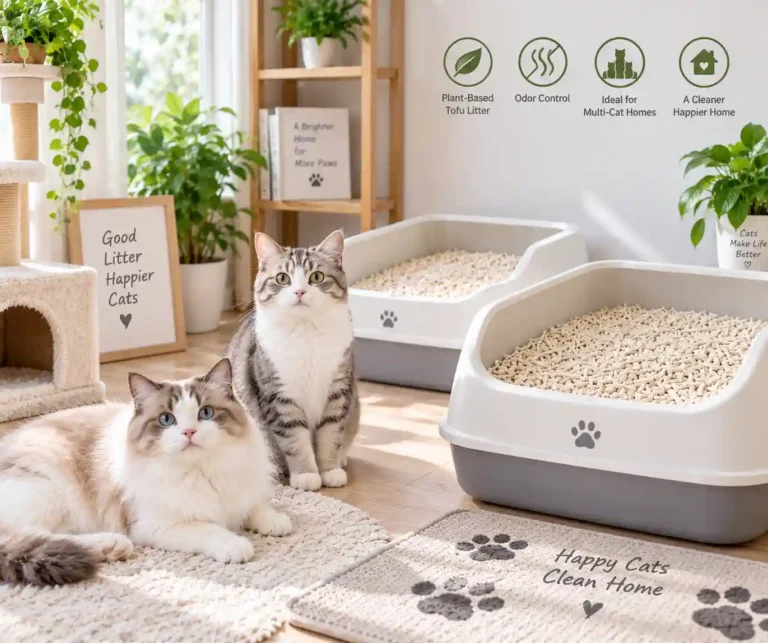
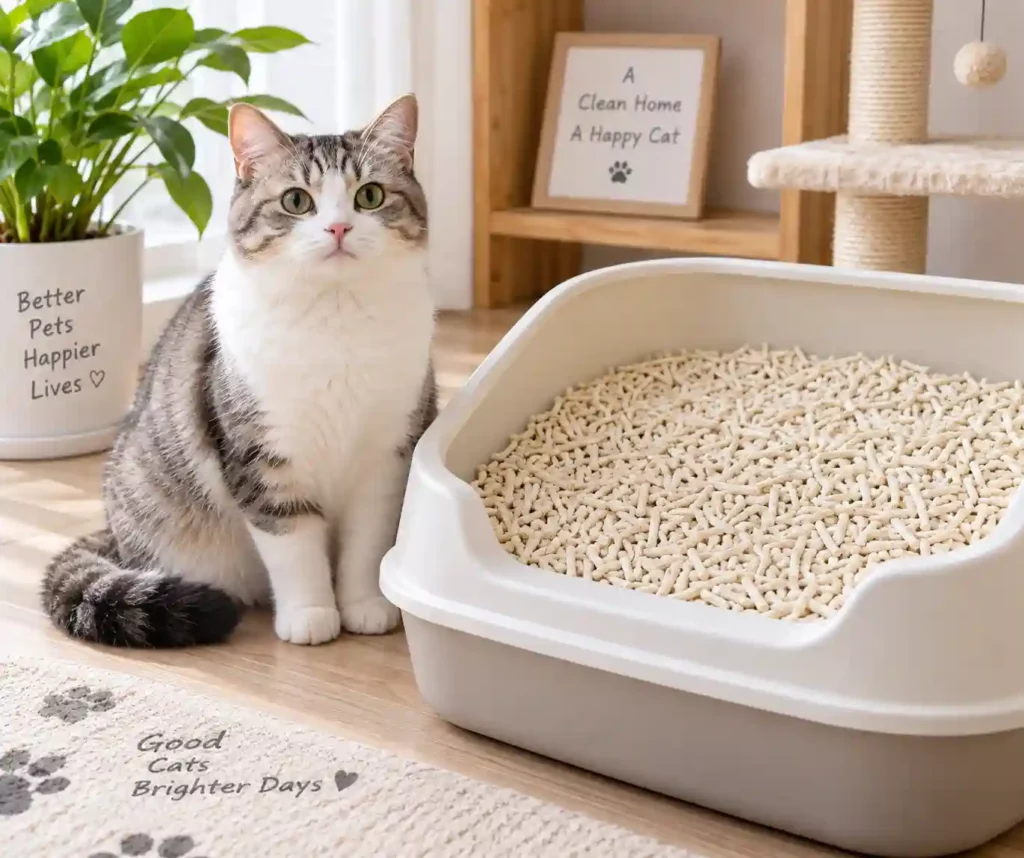
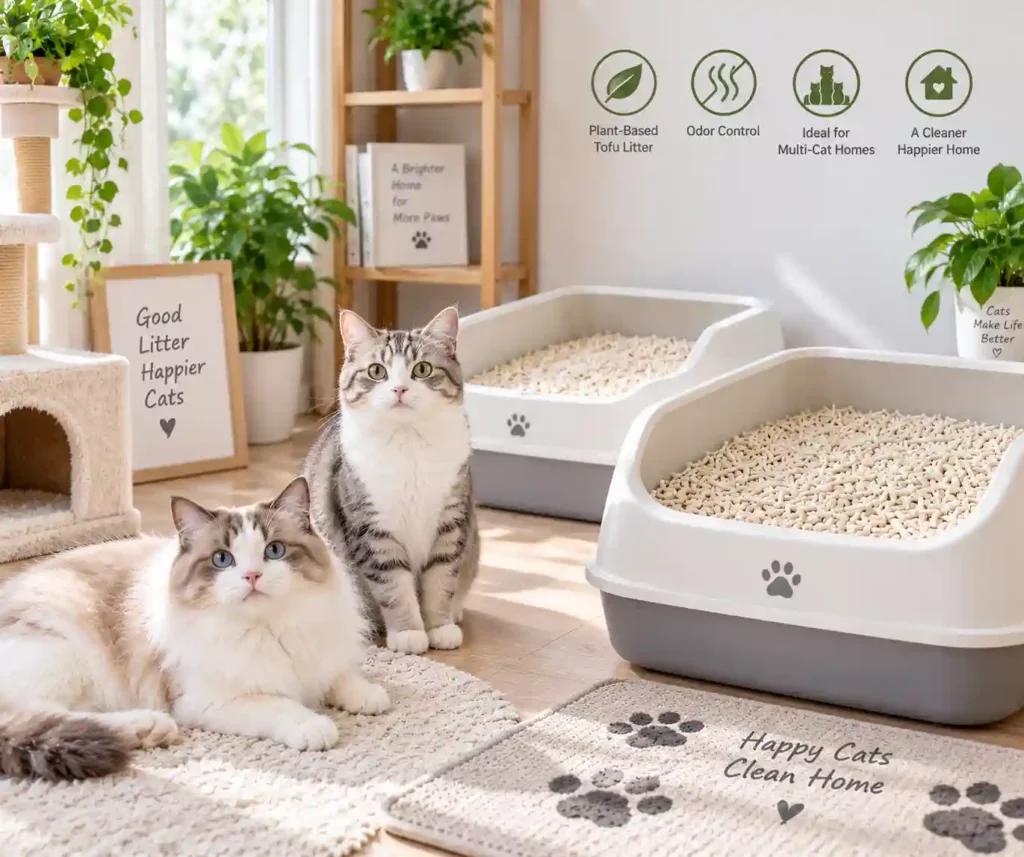
The Atlanta Humane Society guidance dated November 8, 2024 recommends at least one litter box per cat plus one additional box. Give each box a starting-level note and a cleaning record. For a plant-based option, the Bastet tofu cat litter category provides product-specific information to review.
What Does Bastet Specify About Cat Litter Packing and Performance?
Bastet lists tofu, mineral, bentonite, crystal, and cassava cat litter categories. The inspected tofu product information lists 6L or 7L inner packing, 10–30 mm length, 1.0, 1.5, 2.0, or 3.0 mm diameters, absorption of `≥400%`, dust rate `<5%`, odor control, soft texture, and tight clumps.
The inspected crystal product information lists silica gel as the main material, a 1–8 mm granule range or requested size, high adsorption, odor control, and several pack-size options. These values describe the inspected product information. They do not set a universal fill depth or refill interval. Review the Bastet cat litter category when matching a product specification to the box routine.
How Do You Build a Repeatable Cleaning Routine?
Choose a regular scooping time and use the same scoop for each check. Record the remaining level, clump separation, visible dust, tracking on the mat, and the amount added. Consistent notes make it easier to see whether the box routine or the product needs review.
Follow the exact product directions for a full replacement and disposal. Bastet’s litter-changing guidance can support the transition record. The website’s general flushability mention does not establish a flushing rule for every formula; local plumbing and waste requirements also apply.
What Should You Ask a Cat Litter Supplier?
Ask for the recommended fill basis: depth, litres, weight, or a box-size assumption. Request top-up guidance, full-change timing, absorption test basis, clumping description, granule range, dust method, scent, and pack size. Private-label buyers should add packaging artwork, safety documents, destination-market requirements, and quantity.
Ask the supplier to use the same measurement basis in the sample, quotation, and production record. For crystal products, the Bastet crystal cat litter category lists material and pack options for a specification discussion.
Which Cat Litter Amount Fits Your Routine?
Start with the exact product instruction, measure the usable box, and record the starting level. Restore that level after scooping while observing clump removal, clean-litter loss, dust, tracking, and cat acceptance. Adjust only when the product guidance or household record supports a change.
BASTET (Tianjin) Pet Products Co., Ltd. lists five cat-litter categories and product-level tofu and crystal specifications. Send the supplier the box type, cat count, preferred material, fill basis, packing, quantity, and destination market. Those inputs give the supplier a defined basis for confirming a suitable product configuration.
FAQ
Q1: How deep should cat litter be in a litter box?
A: Use the exact product instructions and the usable box dimensions as the starting point. Record the level before first use, then keep that reference level through normal scooping. Product material and box design prevent one universal depth from applying to every home.
Q2: How often should you add cat litter after scooping?
A: Add litter when the remaining layer falls below the recorded starting level or the product guidance calls for a top-up. The amount changes with each clump removed, so a fixed scoop count does not describe every cleaning cycle. Record the amount added for a repeatable routine.
Q3: Does the right amount change for kittens?
A: The fill amount should follow the product instructions and the kitten’s acceptance. Keep the box location stable during a gradual transition and watch use, paw comfort, and loose litter. Veterinary advice is required for pain, blood, or persistent elimination changes.
Q4: How much cat litter is needed for a multi-cat home?
A: Set a starting level for each box and use a cleaning record for each one. The Atlanta Humane Society guidance dated November 8, 2024 recommends at least one litter box per cat plus one additional box. The total litter amount depends on the box dimensions, material, and the amount removed during cleaning.
Q5: What fill-depth information should a supplier provide?
A: Ask whether the recommendation is based on depth, litres, weight, or box dimensions. Request top-up guidance, full-change timing, absorption basis, clumping description, granule range, and pack size. Keep the same measurement basis in samples, quotations, and production records.