A mineral cat litter sample can look good during approval and perform differently after the first container arrives. Dust may increase, clumps may soften, particle sizes may drift, and bags may break during shipping. Importers, wholesalers, and private-label brands carry the cost through returns, complaints, repacking, and lost repeat orders.
A sound approval process checks the material, finished litter, packaging, and batch consistency. Use the following workflow to turn a sample into measurable purchasing requirements before releasing a bulk order.
Why Is One Sample Insufficient?
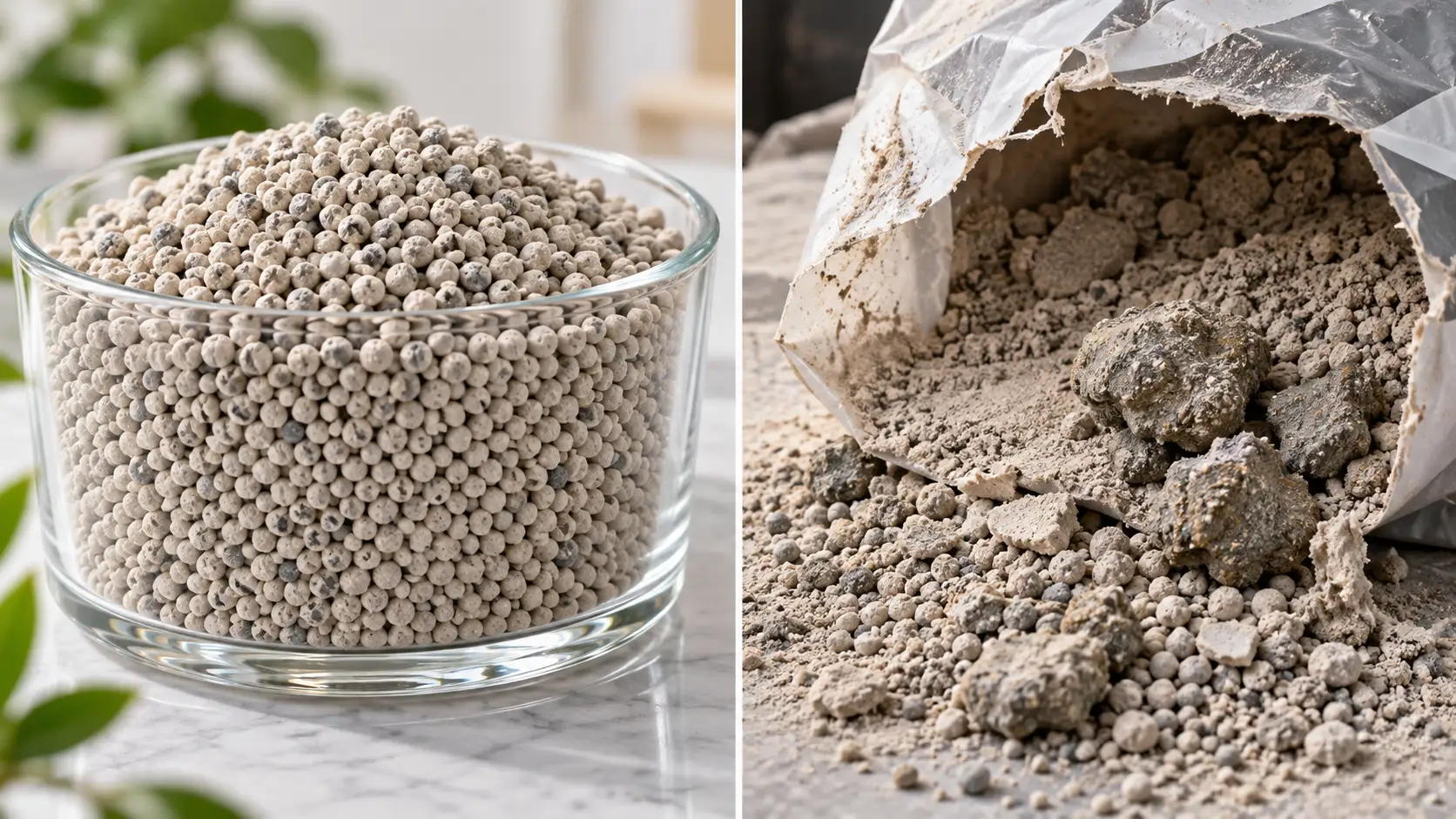
A sample represents one production batch. Natural mineral deposits vary, and drying, crushing, screening, formulation, and packing affect the finished product. Transport vibration can create fines that were absent during approval. Suppliers may also use different liquid volumes, test times, sieves, and definitions for claims such as “low dust” or “three-second clumping.”
Keep a sealed reference sample with its batch number and production date. Record its colour, odour, particle appearance, bulk density, moisture, absorption, clumping, dust, and package weight. Photograph the bag and seals. This retained sample becomes the physical reference for the first shipment and later orders.
Common post-shipment problems include:
More dust than the approved sample
Soft or broken urine clumps
Uneven granule size
Caking caused by moisture
Litter sticking to the tray
Clean litter entering an automatic-box waste drawer
Damaged bags or incorrect net weight
Step 1: Confirm the Mineral Cat Litter Specification
The product specification converts the approved sample into measurable limits. Confirm the base material, particle distribution, moisture, density, additives, and packaging.
Raw Material and Formula
Identify whether the product uses sodium bentonite, calcium bentonite, another absorbent clay, silica, zeolite, or a mineral blend. Record any activated carbon, deodorizing granules, colour, or fragrance. The formula on the specification, package, and commercial documents should match the product supplied.
Bastet Pet publishes a natural sodium bentonite mineral litter range with customizable particles of approximately 0.5–4.0 mm. Its options include activated carbon, deodorizing particles, colours, fragrances, and private-label packaging. Buyers should select the exact formula and record it in the purchase specification.
Particle Size, Moisture, and Density
Request the target particle range, percentage in each size band, maximum fines percentage, and sieve method. Averages can hide excess powder or oversized grains. Particle distribution affects clumping, dust, tracking, paw feel, and automatic-box screen passage.
Add finished moisture, bulk density, and net-weight tolerances. Moisture can soften granules and weaken clumps. Density affects bag volume, freight, and the quantity customers receive by weight.
Step 2: Test Absorption and Clumping
Fast absorption and strong clumps are separate qualities. Test both under controlled conditions.
Standardize the Test
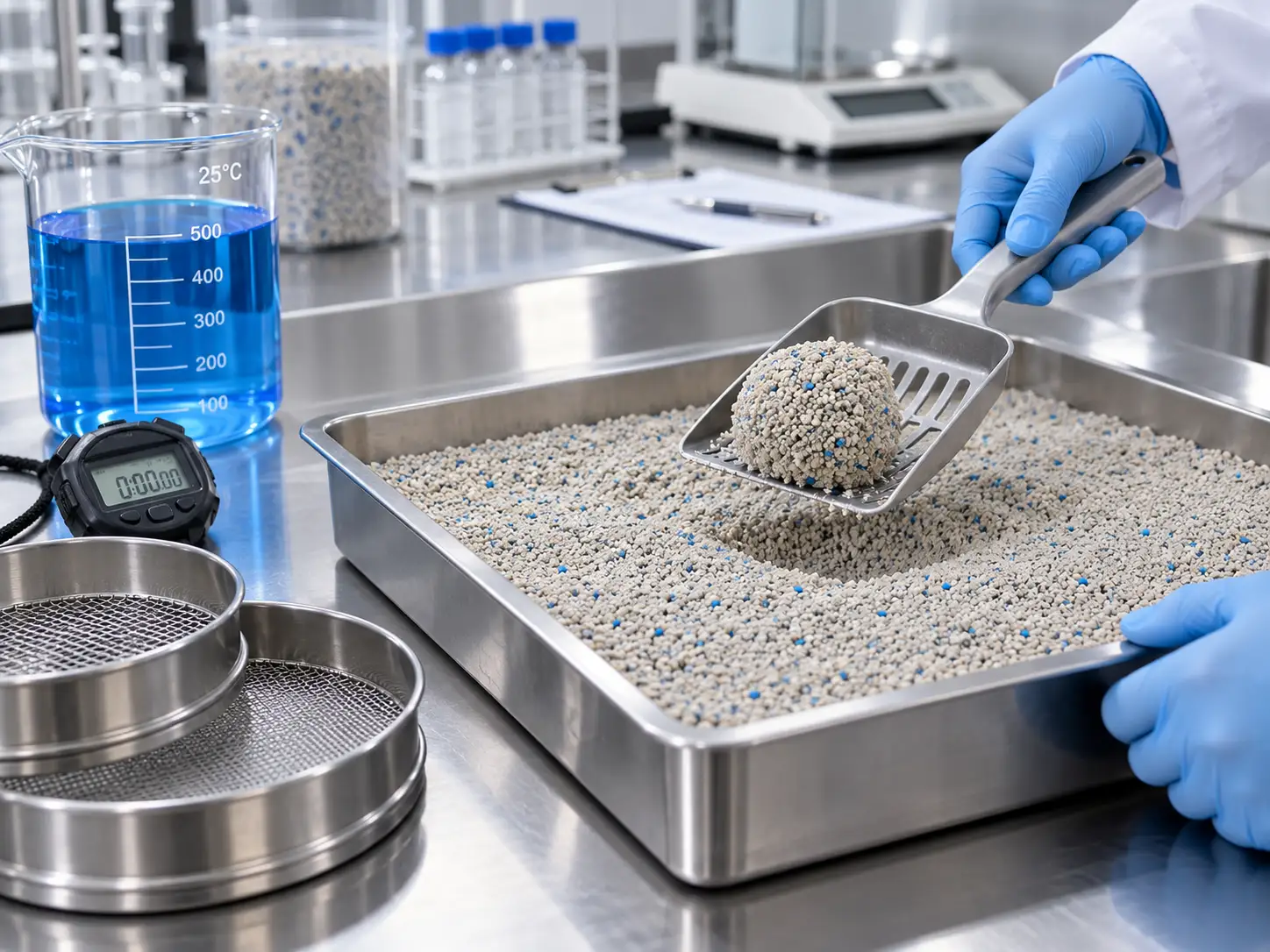
Use the same litter mass, liquid volume, liquid temperature, tray shape, litter depth, and observation times for every sample. Record the conditions so another inspector can repeat the test.
Inspect the sample after one, three, and five minutes. Note liquid spread, initial binding, bottom penetration, and the time required for a scoopable clump. Supplier claims become comparable when their methods use the same conditions.
Check Clump Strength and Residue
Use one scoop and a fixed procedure:
Wait for the agreed setting time.
Lift the clump from the side.
Shake it gently three times.
Record cracks, crumbs, deformation, and wet residue.
Measure how much clean litter remains attached.
Le clumping speed and strength test guide explains how to separate rapid liquid pickup from final scoop integrity.
Inspect the tray after lifting the clump. Record mud-like patches, wet film, flat clumps, and material that requires scraping. Shallow litter, slow absorption, weak binding, tray moisture, and unsuitable particles can cause sticking. Use the cat litter bottom-sticking guide to structure this check.
Step 3: Test Dust, Tracking, and Granule Durability
Dust affects handling, customer complaints, and automatic-box maintenance. Test a fresh sample and repeat the test after transport simulation.
Dust and Fines
Record visible dust during pouring, scooping, and stirring. A laboratory can sieve or weigh fines from a defined sample. Ask the supplier for the sample size, sieve, collection time, method, and acceptance limit behind its dust claim.
Inspect the bag bottom, where fine material often settles. Repeat the test after a defined number of drops, rolls, or vibration cycles. Compare particle distribution and dust before and after handling.
Tracking
Use the same tray, floor, mat, and trial period for each sample. Count or weigh the material outside the box and note whether grains cling to paws, long hair, or carpet. Particle size, shape, density, and litter depth all influence tracking.
Step 4: Evaluate Odor Control
Mineral litter controls odour through liquid management and optional adsorbents. Fragrance changes the perceived smell and needs its own evaluation.
Ask whether the formula contains zeolite, activated carbon, deodorizing particles, or fragrance. Run a three- to seven-day trial using a fixed litter depth, liquid load, room temperature, ventilation, and scooping schedule. Record odour after repeated liquid loads, around solid waste, and in the remaining bed after scooping.
Le bentonite odor-control buyer’s guide explains how clay quality, moisture, clump stability, and additives affect repeat performance.
Step 5: Test the Intended Litter Box
Use the product in the equipment named on the package. In a traditional tray, record absorption, clump lift, bottom residue, dust, tracking, and daily consumption.
Automatic boxes add mechanical requirements. Dry granules must pass through the screen or rake system, and waste clumps must remain intact until the cleaning cycle begins. Check:
Screen passage
Cleaning-delay compatibility
Liner and rake residue
Clean-litter loss
Dust around sensors
Clump breakage across repeated cycles
Each machine has its own screen openings, cycle timing, and fill limits. Record the tested models if the packaging makes an automatic-box compatibility claim.
Step 6: Inspect Packaging and Shipping Performance
Mineral litter is dense, so drops, compression, and vibration can damage bags and break granules. Confirm bag material, seal construction, puncture resistance, moisture protection, net-weight tolerance, label language, units, barcode, pallet pattern, and container loading.
Bastet Pet lists 3-side seal bags, vacuum-compressed bricks, quad-seal bags, stand-up pouches, paper boxes, and several volume options. Select the format according to product weight, route, warehouse conditions, and retail channel.
At arrival, sample bags from different pallet positions. Check torn seams, leaking powder, bag-bottom fines, caking, broken grains, odour changes, and actual net weight. Compare the received product with the retained sample and document damage before moving or repacking the goods.
Step 7: Review Batch Documents
Request the following documents before the first purchase order:
Product specification sheet
Batch-level Certificate of Analysis (COA)
Safety Data Sheet (SDS)
Particle-size analysis
Moisture, density, dust, and clumping records
Packaging specification
Certificate of Origin
Current destination-market documents
Third-party inspection report when required
A useful COA identifies the batch, production date, measured results, test methods, acceptance ranges, and release decision. Ask how retained samples are stored and how long records remain available.
Supplier-control questions should cover raw-material approval, particle screening, fines limits, moisture monitoring, clump testing, retained samples, failed-batch handling, and production repeatability.
How Do Test Results Become a Purchase Specification?
Convert each approved result into a requirement with a test method and tolerance.
| Catégorie | Requirement to Define |
| Mineral type | Base mineral and additives |
| Particle size | Target range, distribution, and fines limit |
| Moisture and density | Permitted batch ranges |
| Clumping | Liquid volume, setting time, and result |
| Clump strength | Crack, crumb, deformation, and residue limits |
| Poussière | Method and acceptance limit |
| Odeur | Multi-day conditions and evaluation method |
| Net weight | Permitted tolerance per bag |
| Emballage | Material, seal, moisture, and stacking requirements |
| Batch control | COA, retained sample, and failed-batch process |
Set these limits according to the target market, cat profile, litter-box equipment, shipping route, and product price position.
What Should Private-Label Buyers Confirm Before the First PO?
Confirm the destination market, mineral declaration, label language, fragrance, colour, bag weight, artwork version, barcode, MOQ, lead time, inspection point, and treatment of failed batches. State whether changes to raw material, particle distribution, additives, fragrance, bag film, or seal require written approval.
These controls allow later shipments to be checked against the same approved formula and packaging version.
How Does Bastet Pet Support OEM and ODM Projects?
BASTET (Tianjin) Pet Products Co., Ltd. manufactures and exports mineral, bentonite, crystal, tofu, cassava, and mixed cat litter. Its published mineral range includes natural sodium bentonite, customizable particles, optional deodorizing solutions, and private-label packaging. Importers can review the mineral cat litter product specifications, request samples, and agree on test methods for dust, clumping, odour, particle size, and packaging. The approved specification can then support COA reviews and repeat-batch inspections.
FAQ (questions fréquentes)
Q1: What should you test first when buying mineral cat litter in bulk?
A: Start with the mineral type, particle distribution, moisture, absorption, clumping speed, clump strength, dust, and packaging condition.
Q2: How do you test mineral cat litter clumping strength?
A: Apply a fixed liquid volume, wait for a defined time, lift the clump with the same scoop, shake it consistently, and record cracks, crumbs, deformation, and residue.
Q3: Is a three-second clumping claim enough to approve a supplier?
A: No. Ask for the liquid volume, sample weight, container, test method, and time used to measure final clump strength.
Q4: Why should buyers test more than one batch?
A: Multiple batches show whether the supplier can reproduce particle size, moisture, dust, absorption, and clumping performance.
Q5: What documents should a mineral cat litter supplier provide?
A: Request a specification sheet, batch-level COA, SDS, particle-size data, packaging specification, and applicable destination-market documents.