Een praktische handleiding voor tijdelijk mengen, materiaaleigenschappen, overgangsstappen en productspecifieke limieten.
Speciaal ontwikkeld voor kattenbezitters wereldwijd door BASTET (Tianjin) Pet Products Co., Ltd.
Het mengen van kattenbakvulling van klei en kristallen kan als tijdelijke oplossing worden gebruikt, mits de gebruiksaanwijzing van beide producten dit toestaat. Een permanente mix vereist aparte goedkeuring, omdat klei en silicagelkristallen vloeistoffen op verschillende manieren verwerken. De mix kan ook invloed hebben op het klonteren, het scheppen, de absorptie of de kleurcontrole.
Het antwoord is dus voorwaardelijk.
Het korte antwoord op de vraag of je klei en kristallen kattenbakvulling moet mengen.
Gebruik een tijdelijke mix wanneer u een kat helpt wennen aan een vertrouwde textuur. Zorg ervoor dat de overgang gecontroleerd verloopt. Blijf een schone kattenbak gebruiken, observeer de reactie van de kat en volg de instructies die bij de kattenbak en het kattenbaksysteem worden geleverd.
Een mengsel voor de lange termijn vereist een andere beslissing. Elke fabrikant publiceert prestatiegegevens voor een specifiek product. Het toevoegen van een ander materiaal verandert die samenstelling. Beschouw het mengsel als niet geverifieerd totdat beide leveranciers bevestigen hoe het gevuld, gereinigd en vervangen moet worden.
Waarom gedragen de twee materialen zich verschillend?
Klei- en kristalstrooisel kunnen er in een bak hetzelfde uitzien. Hun gepubliceerde functies vertellen echter een ander verhaal. Dat verschil heeft gevolgen voor wat er gebeurt nadat urine in het mengsel terechtkomt.
Hoe klonterende klei vloeistoffen absorbeert
Bastet Pet beschrijft zijn kattenbakvulling van bentonietr als een klonterend product. De huidige productinformatie vermeldt snelle absorptie, klontering binnen drie seconden en klonten die tijdens het schoonmaken bij elkaar blijven. Dit zijn beweringen van de fabrikant voor de gespecificeerde bentonietformule. Ze geven geen indicatie van de prestaties van een mengsel.
Het klonteren is afhankelijk van het contact tussen de natte kleideeltjes. De silicakristallen die aan de bak worden toegevoegd, nemen een deel van dat volume in beslag. De schep kan dan tegelijkertijd kleiklonten, losse kristallen en vochtig gemengd materiaal verzamelen. Test het resultaat eerst op een kleine schaal in huis voordat u op dit mengsel vertrouwt.
Hoe silicagelkristallen vloeistoffen verwerken
Bastet Pet identificeert silicagel als het belangrijkste materiaal in zijn kristal kat nestHet bedrijf omschrijft de kristallen als zeer absorberend, stofvrij, duurzaam en ontworpen voor geurbeheersing. Absorberend betekent dat vloeistof aan het binnenoppervlak van het materiaal wordt vastgehouden. De vermelde korrelgrootte varieert van 1 tot 8 mm of een gewenste grootte.
De instructies voor het onderhoud van kristallen kunnen inhouden dat vaste deeltjes worden verwijderd en dat de overgebleven korrels volgens de productinstructies worden verwerkt. Klei zorgt voor een aparte klonteringswerking. De gecombineerde bak bevat nu twee processen voor afvalverwerking. Daarom kan er niet van één universele mengverhouding worden uitgegaan.
Wanneer kan een tijdelijke oplossing helpen?
Een tijdelijke mix kan een vertrouwde geur of textuur meenemen naar een nieuwe kattenbak. Toestemming van de kat voor het product is essentieel. Het gedrag van de kat bepaalt het tempo.
Overgang met twee dozen
Plaats de vertrouwde kleibak naast een schone bak gevuld met de gekozen kristalgrit. Zorg dat beide bakken bereikbaar zijn. Een handleiding van PetSafe over de overgang naar een nieuwe bak raadt deze opstelling naast elkaar aan en suggereert om tijdens de acclimatisatie een kleine hoeveelheid van elk type grit in de andere bak te plaatsen.
Deze aanpak geeft de kat een keuze.
Maak beide kattenbakken schoon volgens de instructies. Observeer welke bak de kat gebruikt, waarin hij graaft en welke hij gebruikt. Houd aantekeningen bij wanneer meerdere katten in huis wonen, want de acceptatie door de ene kat garandeert niet dat de andere kat ook zo reageert.
Gebruik kleine hoeveelheden tijdens de acclimatisatie.
Gebruik slechts een kleine hoeveelheid als de instructies voor het mengen van kristal en klei dit toestaan. Het doel is gewenning tijdens de overgang. Verhoog de hoeveelheid nieuw strooisel volgens de goedgekeurde overgangsrichtlijnen en eindig vervolgens met het gekozen strooisel op zichzelf.
Geen enkele geraadpleegde bron heeft een universele verhouding tussen klei en kristallen vastgesteld. Productontwerp is belangrijk. Kattengedrag speelt ook een rol.
Wanneer moeten de nestjes gescheiden blijven?
Aparte doosjes bewaren de instructies en prestatieclaims die bij elk product horen. Ze maken het ook gemakkelijker om wijzigingen te observeren. Drie situaties vereisen extra voorzichtigheid.
Kleurbewakingskristalproducten
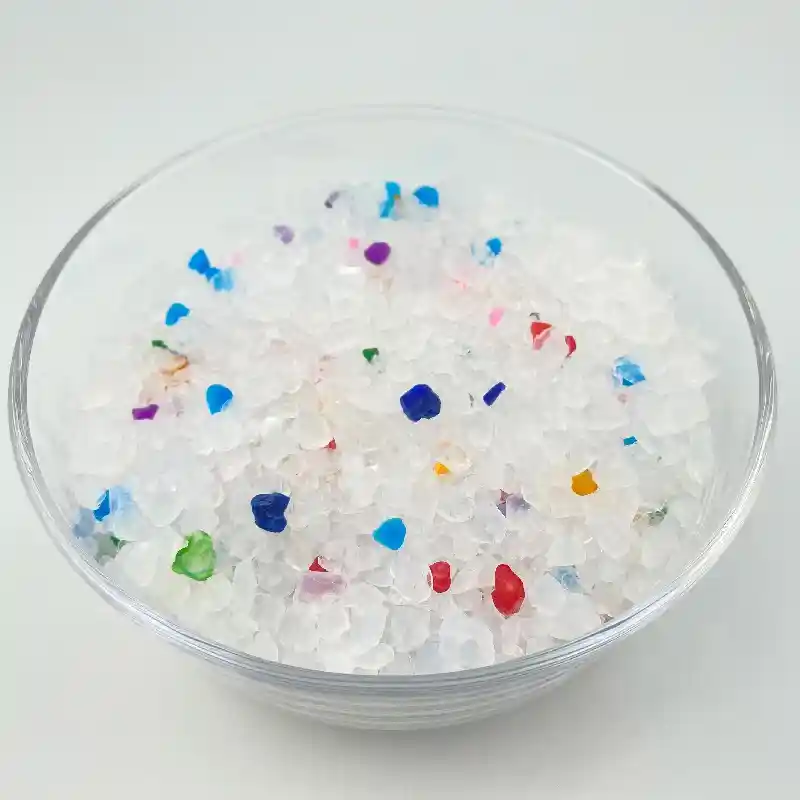
Sommige kristalproducten gebruiken kleurveranderingen om aanwijzingen te geven voor urineren. PrettyLitter geeft aan dat het combineren van hun kristallen met andere kattenbakvulling de kleurverandering kan beïnvloeden. Hun compatibiliteitsrichtlijnen adviseren om mengen alleen als tijdelijke overgang te gebruiken.
Volg de instructies van het monitoringsproduct nauwkeurig op. Gebruik geen gemengde teststrip om een gezondheidssignaal te interpreteren wanneer de fabrikant vereist dat de kristallen afzonderlijk werken. Een dierenarts onderzoekt de kat en stelt de diagnose.
Veranderingen in klontering of absorptie
Het schepje levert nuttig bewijs op. Let op zwakke klonten, los, nat materiaal, kristallen die in de klei vastzitten of een reinigingsroutine die niet overeenkomt met de productinstructies. Noteer het mengsel en het waargenomen resultaat.
Pauzeer het mixproces wanneer de prestaties onduidelijk worden.
Ga terug naar de aparte dozen terwijl u de leveranciers om advies vraagt. Zo blijft de volgende beslissing gekoppeld aan een bekende productspecificatie.
Instructies voor het automatische afvalsysteem
Automatische systemen kunnen specificaties bevatten voor de compatibele korrelgrootte, het type strooisel, het vulniveau of het klontergedrag. Houd u aan deze vereisten. Een materiaal dat goed werkt in een handmatige bak, kan zich anders gedragen in de buurt van een hark, zeef, sensor of wegwerpbak.
Gebruik uitsluitend combinaties die voor het betreffende systeem zijn goedgekeurd.
Een praktische overgang van klei naar kristal
Gebruik deze volgorde wanneer de productinstructies een geleidelijke verandering ondersteunen:
- Lees de gebruiksaanwijzing voor de klei- en kristalstrooisel en de kattenbak.
- Zet een schoon kristallen doosje naast het vertrouwde kleien doosje.
- Verplaats alleen de kleine hoeveelheid die is toegestaan volgens de overgangsinstructies.
- Reinig elke doos afhankelijk van het materiaal dat erin zit.
- Observeer het gebruik van de bak, het graven, de conditie van de klonten, de hoeveelheid los vocht en het volgen van sporen.
- Verhoog het aandeel kristallen in het tempo van de kat en binnen de richtlijnen van de leverancier.
- Voltooi de overgang uitsluitend met kristalstrooisel wanneer dat de gekozen eindconfiguratie is.
Houd het proces eenvoudig.
Tekenen dat de overgang aanpassing behoeft
Verander de samenstelling van de kattenbakvulling geleidelijk wanneer de kat de nieuwe bak niet meer gebruikt, ergens anders zijn behoefte doet of steeds weer voor de vertrouwde vulling kiest. Zorg dat de vertrouwde bak beschikbaar blijft. Controleer de reinheid van de bak, de locatie, de dikte van de vulling en de gebruiksaanwijzing voordat u de samenstelling opnieuw verandert.
Lichamelijke problemen vereisen een andere aanpak. Neem contact op met een dierenarts als de kat perst, ongewoon veel plast, kattenbakvulling eet, hoest rond de bak of andere gezondheidsveranderingen vertoont. Het aanpassen van de kattenbakvulling kan geen medische aandoening diagnosticeren of behandelen.
Gebruik een mengsel van klei- en kristalstrooisel als gecontroleerde overgangsmethode. De instructies van de leverancier, de compatibiliteit met de kattenbak en het gedrag van de kat bepalen de grenzen.
Over Bastet Pet
BASTET (Tianjin) Pet Products Co., Ltd. produceert en exporteert diverse soorten katten nestwaaronder bentoniet- en silicagelkristalproducten. De officiële informatie beschrijft een geavanceerde productielijn, een intern ontwikkelingsteam en kwaliteitscontrole per batch.
De Website voor weddenschappen op huisdieren De specificaties voor klonterend bentoniet en adsorberend kristalstrooisel worden apart vermeld. Kopers die een overgangs- of aangepaste mix overwegen, dienen de productnamen, korrelgroottes, beoogde verhouding, verpakkingstype, hoeveelheid en bestemming door te geven. De leverancier kan dan bevestigen of het beoogde gebruik geschikt is voor de geselecteerde producten.
Veelgestelde vragen
Vraag 1: Kunnen kattenbakvulling van klei en kristal permanent gemengd blijven?
Een: Er bestaat geen algemene goedkeuring voor het permanent mengen van verschillende soorten kattenbakvulling in de geraadpleegde bronnen. Gebruik een mengsel voor de lange termijn alleen als zowel de fabrikant van de kattenbakvulling als de fabrikant van de kattenbak de exacte combinatie toestaan. Anders kunt u de overgang voltooien met één goedgekeurde kattenbakvulling of de kattenbakken gescheiden houden.
Vraag 2: Bestaat er een standaard mengverhouding tussen klei en kristallen?
Een: Er werd geen standaardverhouding gevonden in de bronnen die op 7 augustus 2026 werden geraadpleegd. Bastet Pet publiceert aparte specificaties voor haar bentoniet- en silicagelproducten en publiceert geen klei-kristalverhouding. Vraag de leveranciers naar instructies die specifiek voor de betreffende producten gelden.
Vraag 3: Kan mengen de klontering of absorptie beïnvloeden?
Een: Ja, het mengsel kan een ander reinigingsresultaat opleveren. Bastet Pet beschrijft bentoniet als klonterend en silicagel als zeer adsorberend. Test een geschikte overgangshoeveelheid en stop wanneer de klonten zwakker worden, nat materiaal los blijft of de verzorgingsroutine onduidelijk wordt.
Vraag 4: Kan klei de kleurverandering van kristalstrooisel beïnvloeden?
Een: PrettyLitter geeft aan dat het mengen van verschillende soorten kattenbakvulling de kleurverandering kan beïnvloeden en adviseert om dit alleen tijdelijk te doen. Volg de instructies voor het betreffende product. Raadpleeg een dierenarts bij eventuele gezondheidsproblemen.
Vraag 5: Wat moet u doen als uw kat het gemengde kattengrit vermijdt?
Een: Stop met het verhogen van de hoeveelheid en zorg dat er een schone bak met de vertrouwde kattenbakvulling beschikbaar is. De richtlijnen van PetSafe voor de overgang adviseren het gebruik van twee naast elkaar geplaatste bakken en een geleidelijke introductie. Raadpleeg een dierenarts als uw kat de bak vermijdt, bijvoorbeeld door te persen, ongewoon te plassen, kattenbakvulling te eten, te hoesten of een andere verandering in zijn of haar gezondheid op te treden.