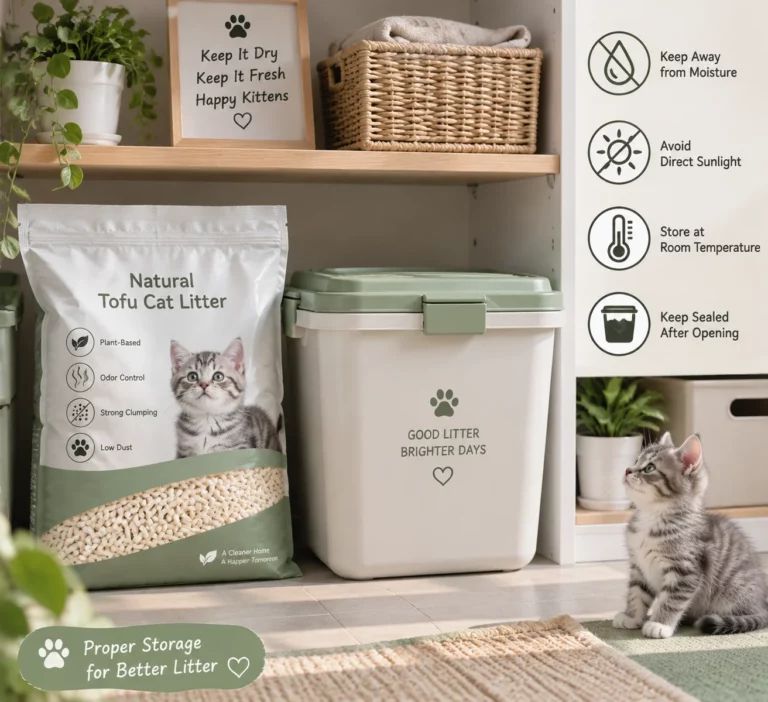
Buying cat litter is only part of the routine. Storage affects refilling, product identification, and package checks.
Keep unopened packs protected and identifiable, close opened packs carefully, and check the litter before use. Exact handling instructions belong to the selected formula.
Where Should You Store Cat Litter at Home?
Choose a clean, reachable location that keeps litter separate from food, medicines, and household chemicals. A small apartment can use one marked shelf or cabinet; a multi-cat home may need a reserve area plus a daily-use spot.
Keep the material and pack size visible. This matters when tofu, crystal, bentonite, mineral, and cassava products share one storage area. A clear label helps you select the intended product during a quick refill.
Choose a Stable, Reachable Location
Place the pack where household activity will not crush, puncture, or soak it. Keep refill tools close to the box and reserve stock in its identified spot. Follow every handling condition on the product label.
Keep the Package Identity Visible
Record the material, product name, pack size, flavor where applicable, and supplied lot marking. The note coordinates refills and supports a supplier review.
How Do You Store an Unopened Cat Litter Bag?
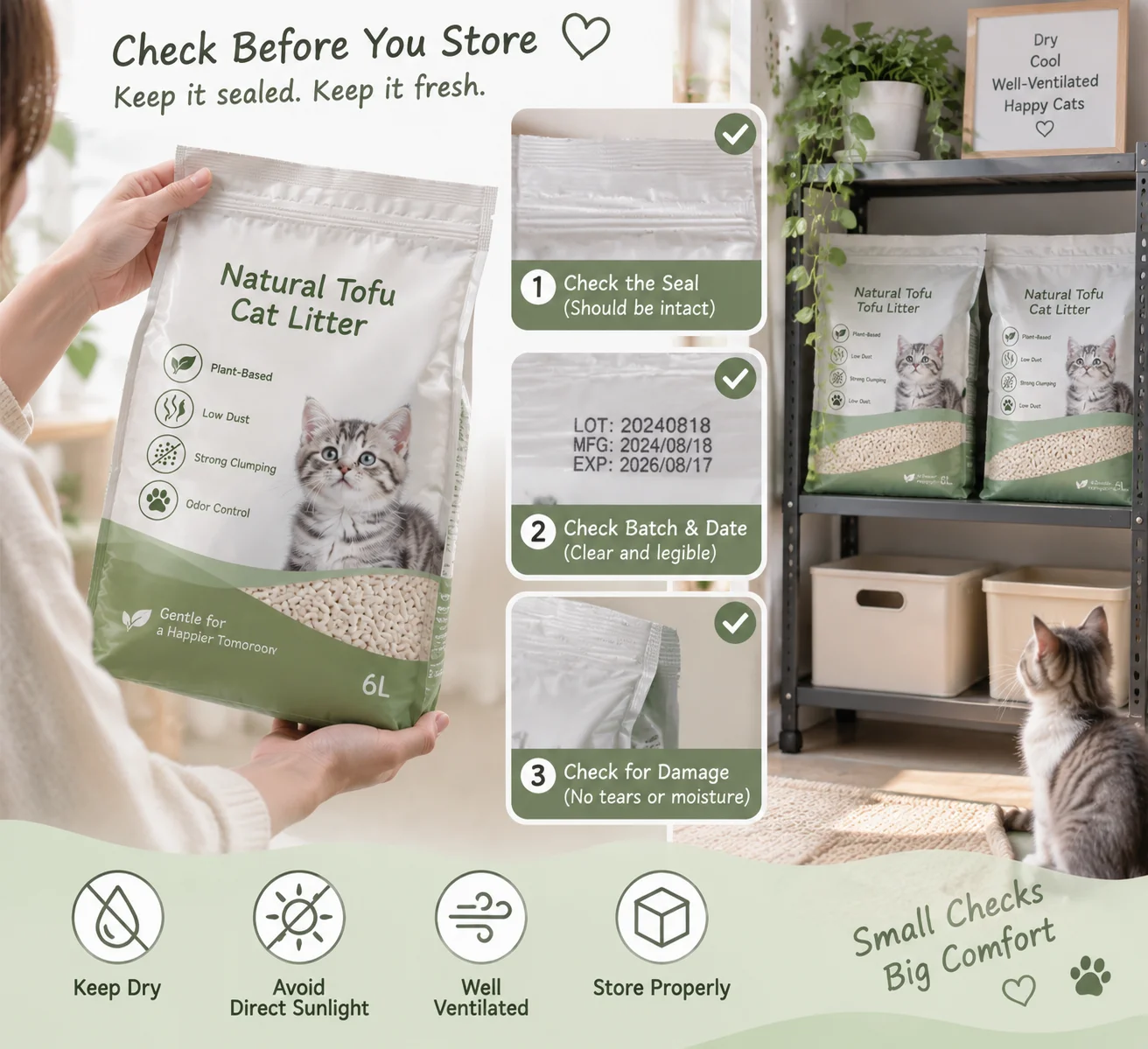
Check the outer package for tears, open seams, wet marks, crushed corners, or a missing label. Ask the seller or supplier about a damaged pack before use.
Keep unopened packs in their original packaging unless the instructions specify another method. The label carries the material identity and pack information. Store each material separately and visibly.
| Storage task | What to check | Record or action |
|---|---|---|
| Receive a new pack | Seal, label, lot marking, visible damage | Note the condition and product identity |
| Put reserve stock away | Clean access and separation from chemicals | Keep the label facing outward |
| Move a pack to daily use | Pack remains closed until needed | Mark the opening date |
| Find a damaged pack | Wet mark, tear, missing identity, unusual odor | Hold it and request product-specific guidance |
Check the Outer Package Before Putting It Away
Lift the pack by a sound area and place it where other items will not press against it. Keep the product information available for later reference.
Keep Different Materials and Sizes Identified
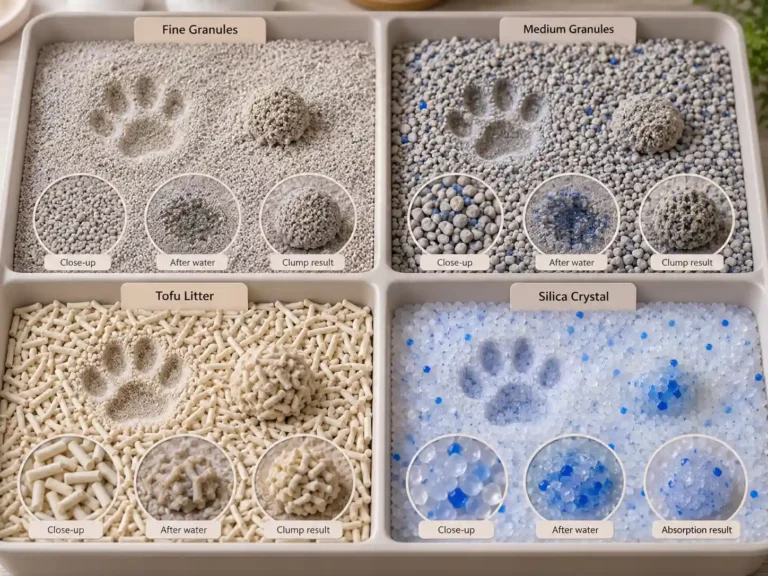
Bastet lists tofu, mineral, bentonite, crystal, and cassava cat litter. Use a visible label for each material, granule size, or scented version kept in the same area.
How Should You Store Opened Cat Litter?
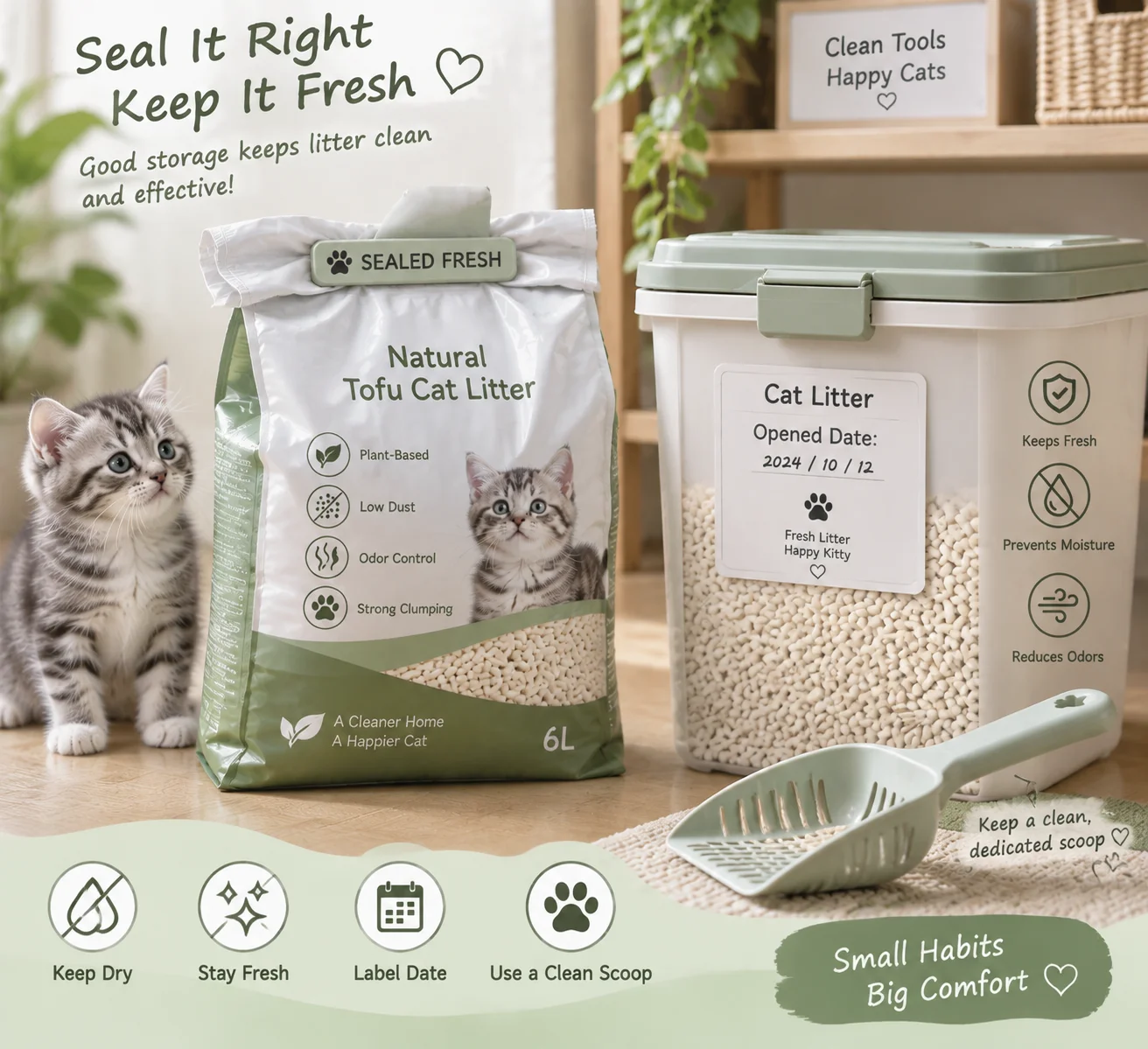
Use the original closure or a clean container permitted by the product instructions. Keep the opening above the floor and away from splash zones. Label every transferred product.
Use a dedicated scoop and return it to a clean resting spot after each refill. Keep a scoop used for waste out of reserve litter.
Close the Original Pack or Approved Container
Write the product name and opening date on an approved container. Retain the original label when the container lacks product details. The opening date supports stock rotation; it does not create an expiry date.
Keep the Scoop and Refill Area Clean
Brush loose granules from the pack before closing it. Clean the scoop according to the household routine before it returns to storage. Keep food-preparation tools out of this area.
Record Opening Date and Product Details
Write down the material, pack size, listed granule information, and scent choice. The note coordinates refills and supports a supplier review.
Does Storage Change for Tofu, Crystal, Bentonite, or Cassava Cat Litter?
Storage starts with the exact label. Bastet’s inspected tofu information lists 6L or 7L inner packing, pea fiber and corn starch as main material, and granules with 10–30 mm length and 1.0, 1.5, 2.0, or 3.0 mm diameters. The same product information identifies soybean, corn starch, and guar gum as natural ingredients. It lists absorption of `≥400%`, dust rate `<5%`, odor control, soft texture, tight clumps, and a 99% dust-free claim.
The inspected crystal information lists silica gel, a 1–8 mm granule range or requested size, high adsorption, odor control, a dust-free claim, and 3.8L, 5L, 7.2L, 8L, and 10L pack options. These values apply to the inspected product information. They do not set storage conditions or shelf life for every formula.
Review Bastet’s gama de areia para gatos, then match the selected label to the storage record.
Match Handling to the Material and Label
Read the material, pack construction, scent, granule range, and disposal notes before changing storage. Ask the supplier when the label leaves a handling point open.
Use Pack Size That Fits the Household Routine
Choose a pack that household members can lift, close, and identify. Bastet lists several tofu and crystal packing options. Match the selection to box count, refill frequency, and storage space.
How Can Multi-Cat Homes Organize Cat Litter Refills?
Count the boxes before deciding how much reserve stock to keep. Atlanta Humane Society guidance dated November 8, 2024 recommends at least one litter box per cat plus one additional box. It does not set a reserve quantity.
Plan Around Box Count and Access
Give every box a clear cleaning and refill route. Keep daily-use stock accessible and reserve packs in a separate, labelled location. Record the remaining packs.
Separate Daily-Use Stock From Reserve Stock
Open one pack at a time when the routine allows it. Keep reserve packs closed and identifiable.
img.Sealing opened cat litter bag with scoop.webp
What Should You Check Before Adding Stored Cat Litter to the Box?
Before pouring, inspect the closure, label, and litter appearance. Note unusual odor, unexpected dust, dampness, clumping changes, or granules that differ from the recorded product.
Inspect Package Condition and Material Appearance
Set a questionable pack aside and request product-specific guidance. Keep unidentified or damaged material out of a box already in use. Follow exact product instructions and local disposal rules.
Review Dust, Odor, Texture, and Clumping Notes
Compare the litter with its description and your cleaning record. Bastet describes odor control and tight clumps for the inspected tofu product; its crystal information describes high adsorption and odor control. Household observations still belong in the refill record.
When Product Instructions Need Confirmation
When changing material or replacing a full box, follow Bastet’s cat-litter changing guidance. Request veterinary advice for pain, blood, or persistent elimination changes; storage checks cannot diagnose a cat.
What Should You Ask a Cat Litter Supplier About Storage?
Request current pack construction, inner and outer packaging, lot marking, opening guidance, material-specific handling instructions, and any supplied storage or shelf-life statement. Ask which label fields stay with an opened container.
For confirmation, provide the material, granule range, scent, pack size, cat count, box count, expected usage, storage setup, and destination market.
Which Cat Litter Storage Routine Fits Your Home?
The right routine is the one household members can repeat: identify each pack, keep reserve stock closed, close opened litter carefully, use a dedicated scoop, and inspect the product before refilling.
BASTET (Tianjin) Pet Products Co., Ltd. lists tofu, mineral, bentonite, crystal, and cassava cat litter categories. Buyers comparing a tofu or crystal option can send the material, granule preference, pack size, cat count, box count, quantity, and destination market for product-specific storage information. The tofu cat litter category e crystal cat litter category show the relevant product groups.
FAQ
Q1: Can Cat Litter Be Stored in Its Original Bag?
A: Yes. Keep the original pack closed, identifiable, and protected from damage. Check the label and package condition before use, and follow any handling instruction supplied for that formula.
Q2: How Should Opened Cat Litter Be Kept Ready for Daily Use?
A: Close the original pack or use a container permitted by the product instructions. Keep a dedicated scoop clean and record the material, pack size, and opening date so refills remain traceable.
Q3: Does Tofu Cat Litter Need Different Storage From Crystal Cat Litter?
A: Use the exact instructions for the selected product. Bastet lists tofu and crystal products with different materials, granule information, and pack options, while the inspected details do not establish one universal storage condition for either category.
Q4: How Much Cat Litter Should a Multi-Cat Home Keep on Hand?
A: The available sources do not set a universal reserve quantity. Plan from the number of boxes, the household’s refill rate, pack size, and storage capacity; the Atlanta Humane Society guidance dated November 8, 2024 recommends at least one box per cat plus one additional box.
Q5: What Storage Information Should a Cat Litter Supplier Provide?
A: Ask for pack construction, lot marking, opening guidance, material-specific handling instructions, and any supplied storage or shelf-life statement. Include the chosen material, granule range, pack size, cat count, box count, quantity, and destination market in the request.